Some links on this blog may contain affiliate links. If you make a purchase through one of these links, I may earn a small commission at no extra cost to you. Thank you for supporting Enchanted Kids Moment!
There are many days when children have plenty of energy to burn, but the weather, limited outdoor space, or a busy schedule makes going outside difficult. I always enjoy sharing easy activities that keep children moving, having fun, and using their imagination without needing a complicated setup.
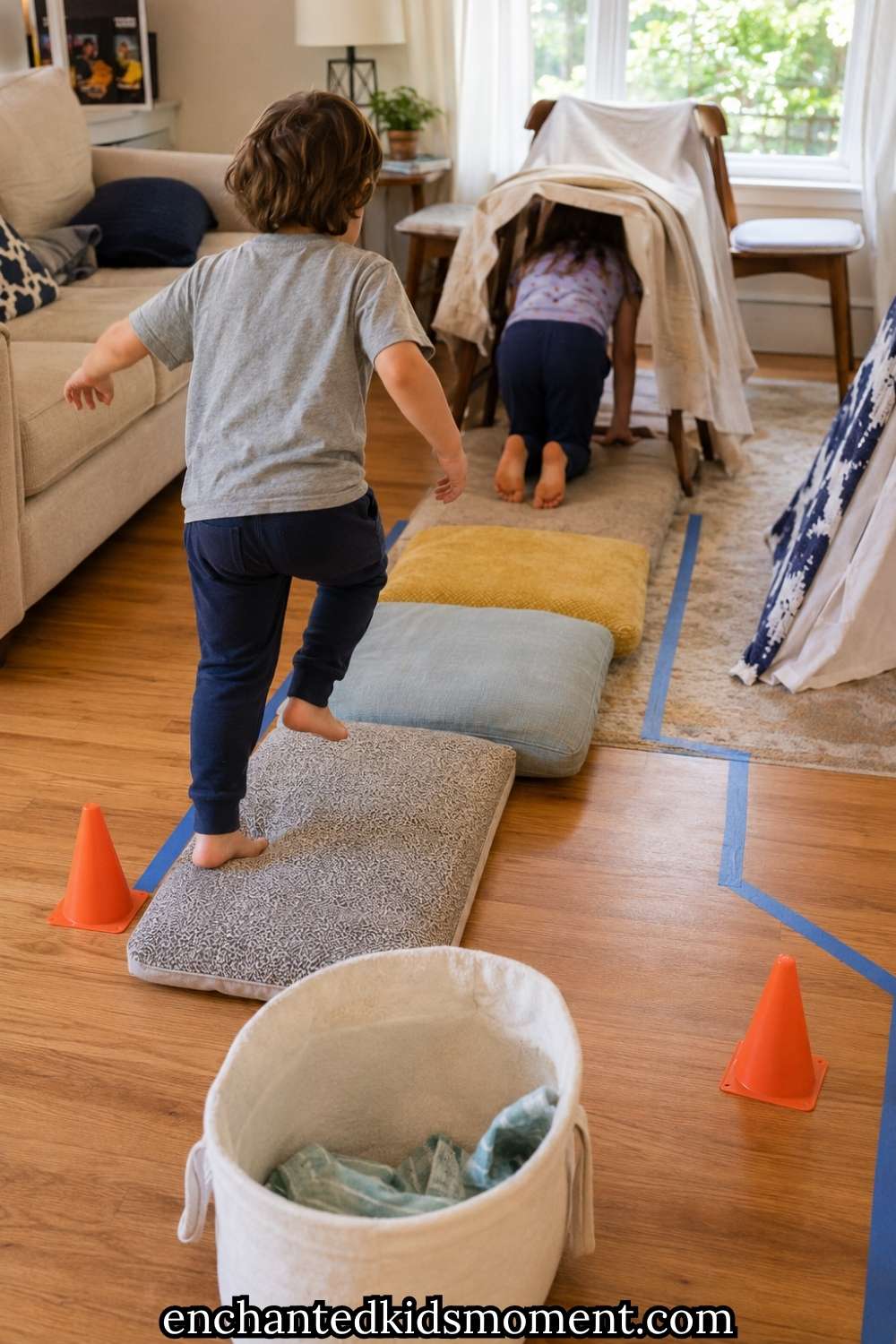
One activity I love recommending is a simple indoor obstacle course because it transforms an ordinary room into an exciting place for adventure and discovery. Children can crawl under tables, jump between markers, balance along a line, and complete playful challenges using items already found around the home.
A simple indoor obstacle course is also a wonderful way to support physical development. It encourages balance, coordination, problem-solving, and confidence while making exercise feel like a game instead of a routine. Every obstacle can be adjusted based on a child’s age, abilities, and interests, which makes this activity suitable for toddlers, preschoolers, and older kids.
If you are looking for more ways to keep children engaged throughout the day, explore these 25 Fun & Easy Indoor DIY Activities and Crafts for Kids that include creative and entertaining ideas for different ages.
What I love most about indoor obstacle courses is their flexibility. You can create a quick five-minute challenge on a busy afternoon or design a more detailed adventure with themes, stories, and fun missions. A simple living room can become a jungle trail, a space mission, or a magical kingdom where children complete exciting tasks.
After all the running, climbing, and jumping, children may enjoy a quieter creative activity. These ocean crafts for kids are a perfect way to continue the fun with hands-on projects inspired by the underwater world.
In this guide, I will walk you through simple steps, creative ideas, and helpful tips to set up an indoor obstacle course that brings excitement, movement, and imagination into any day.
Why a Simple Indoor Obstacle Course Is One of the Best Activities for Kids
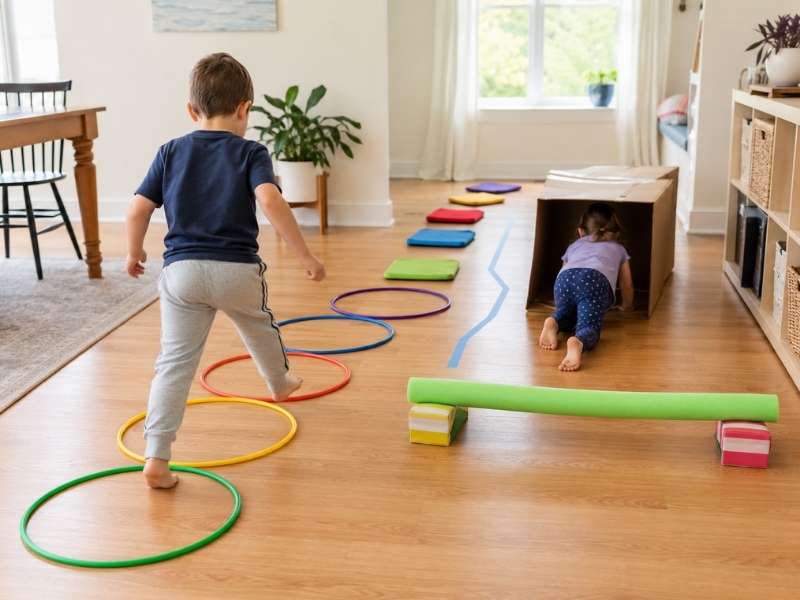
Children have endless energy and a natural desire to explore their surroundings. However, there are moments when going outside is not convenient. That is when a simple indoor obstacle course becomes a wonderful way to bring movement, fun, and creativity into the home.
I love sharing activities that encourage children to stay active while enjoying imaginative play. A simple indoor obstacle course gives them a chance to jump, crawl, balance, climb, and solve little challenges using everyday items around the house.
Unlike many planned activities, a simple indoor obstacle course can change every time you set it up. You can create a quick challenge for a few minutes of fun or design a larger adventure with different stations and creative themes.
Children who enjoy creative challenges may also have fun making DIY squishy crafts for sleepovers after they finish their active play session.
Another reason I love this activity is the way it supports important developmental skills. Children build strength, improve coordination, practice problem-solving, and gain confidence while they play.
The best part is that there are endless ways to customize an indoor obstacle course. You can create animal adventures, treasure hunts, superhero missions, or magical journeys that make children feel like they are inside a story.
For children who enjoy imaginative worlds and characters, Minecraft birthday party ideas can offer plenty of inspiration for creating exciting obstacle course themes.
What You Need Before You Start
You do not need expensive equipment to create a fun obstacle course. Walk around your home first. You will probably find almost everything you need.
Useful items include:
- Sofa cushions
- Pillows
- Painter’s tape
- Masking tape
- Dining chairs
- Blankets
- Cardboard boxes
- Laundry baskets
- Hula hoops
- Pool noodles
- Stuffed animals
- Plastic cups
- Paper plates
- Small cones
- Balloons
- A stopwatch or timer
Choose lightweight items that children can move safely. Avoid anything with sharp corners or anything that could tip over easily.
If you enjoy creating activities with simple household supplies, The Complete Guide to Choosing Age-Appropriate Activities for Children has even more ideas that encourage creative play indoors and outdoors.
How to Set Up a Simple Indoor Obstacle Course for Kids
1: Choose the Safest Space
Start by finding an open area where children have enough room to move.
A living room often works well because furniture naturally creates different obstacle options. A playroom, finished basement, or wide hallway can also be excellent choices.
Move coffee tables, lamps, breakable decorations, and anything children could bump into while running.
Look around from a child’s height instead of your own.
Notice anything they could trip over.
Roll up loose rugs if they slide easily.
Make sure the floor stays dry before anyone begins.
A safe space helps children relax and enjoy every challenge instead of worrying about getting hurt.
If your play area also doubles as a bedroom or playroom, How to Design a Kids Bedroom That Balances Fun and Function shares ideas for keeping spaces both fun and practical.
2: Decide How Your Course Will Flow
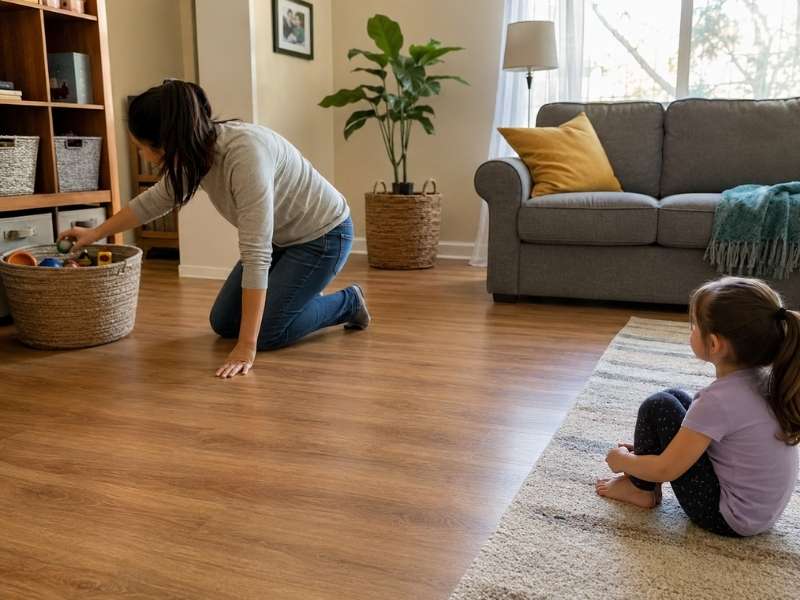
Before placing obstacles, imagine how children will travel through the room.
Avoid sending them back and forth across the same space.
Instead, create one clear path from the starting point to the finish line.
You might begin near the doorway.
Children could hop across paper stepping stones.
Then crawl under chairs.
Next, balance along a taped line before tossing a beanbag into a basket.
Finally, they can race to the finish.
Keeping everything moving in one direction reduces waiting and prevents children from bumping into each other.
Walk through the course yourself before inviting anyone else to try it.
Small adjustments now make the activity much smoother later.
3: Mark a Clear Starting Line
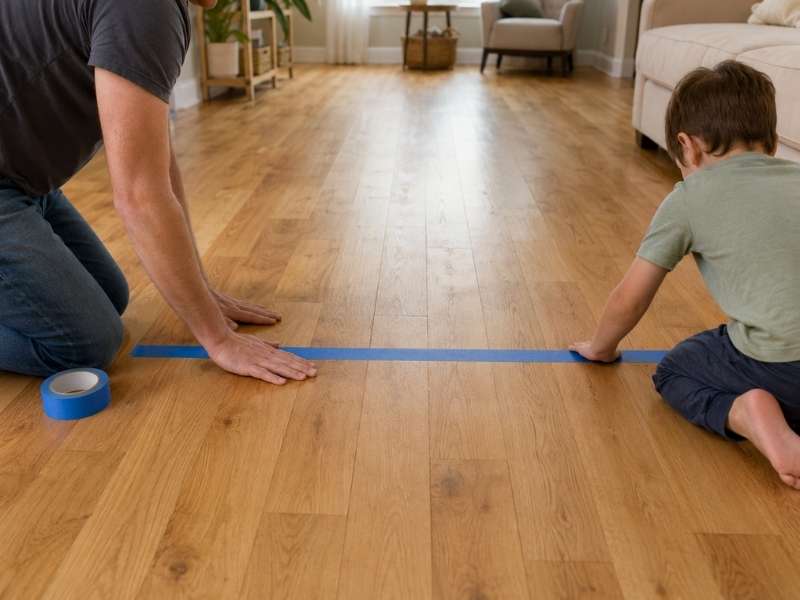
Every obstacle course feels more exciting with an official beginning.
Use painter’s tape to create a bright starting line across the floor.
You can also use a jump rope or colorful ribbon if you prefer.
Explain the rules before anyone starts.
Children should wait behind the line until you say “Go.”
If several children are playing together, let everyone take turns instead of racing all at once.
That gives each child enough space to complete every obstacle safely.
A simple starting line also helps younger children understand exactly where the adventure begins.
If your children enjoy imaginative themes, turn the starting area into a pretend campsite, castle gate, or jungle entrance inspired by 17 Fairy Birthday Party Ideas That Will Turn Your Kids Party Into a Real-Life Fairytale.
4: Create a Jumping Section
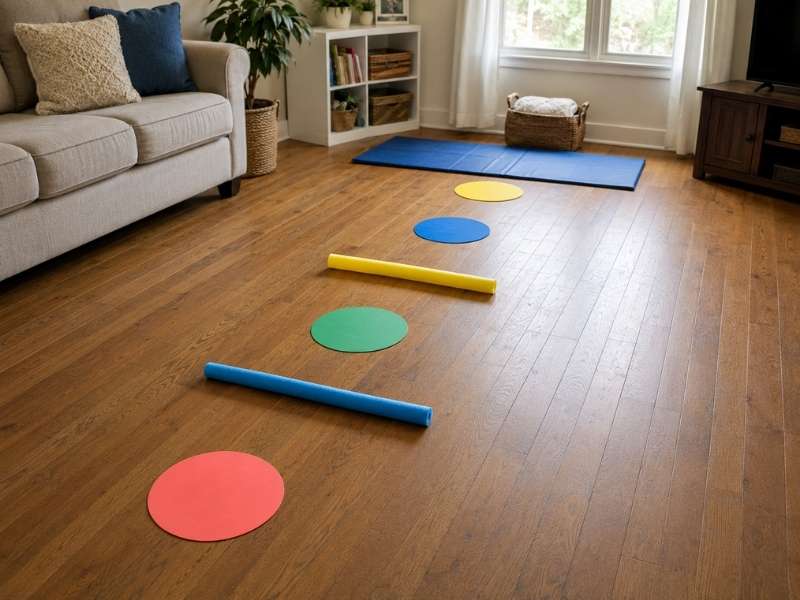
Jumping quickly becomes one of the most popular parts of any obstacle course.
Lay paper plates, foam mats, or pieces of colored paper across the floor.
Leave enough space between each one so children need to jump instead of simply stepping.
You can make every stepping stone a different color.
Call out a color before each jump.
You might even number the spots and ask children to jump in order.
Older children enjoy zigzag patterns that require more balance.
Younger children usually feel more confident with larger stepping areas placed closer together.
This simple obstacle builds coordination while keeping children active from the very beginning.
For even more colorful activity ideas, 35 Easy Painting Ideas for Toddlers That Don’t Create Huge Messes includes projects that can be combined with movement games before or after your obstacle course.
5: Add a Crawling Tunnel
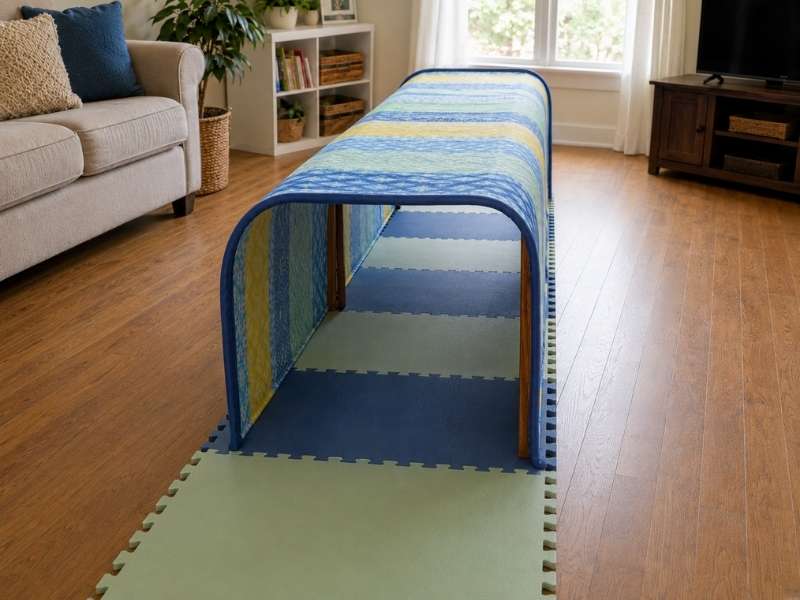
Children almost always smile when they see a tunnel.
The easiest option uses two or three sturdy dining chairs with a blanket draped across the top.
Make sure the blanket hangs low enough to create a tunnel but high enough for children to crawl comfortably underneath.
Keep the chairs stable before anyone begins.
You can also create a tunnel using large cardboard boxes placed end to end.
Encourage children to crawl all the way through before standing again.
Pretend they are explorers moving through a secret cave or astronauts entering a space station.
Adding a story keeps children interested much longer than simply saying, “Crawl under the blanket.”
If your child loves space adventures, 17 Space Nursery Designs for Little Future Astronauts offers plenty of inspiration for creating an exciting outer-space theme.
6: Make a Balance Walk
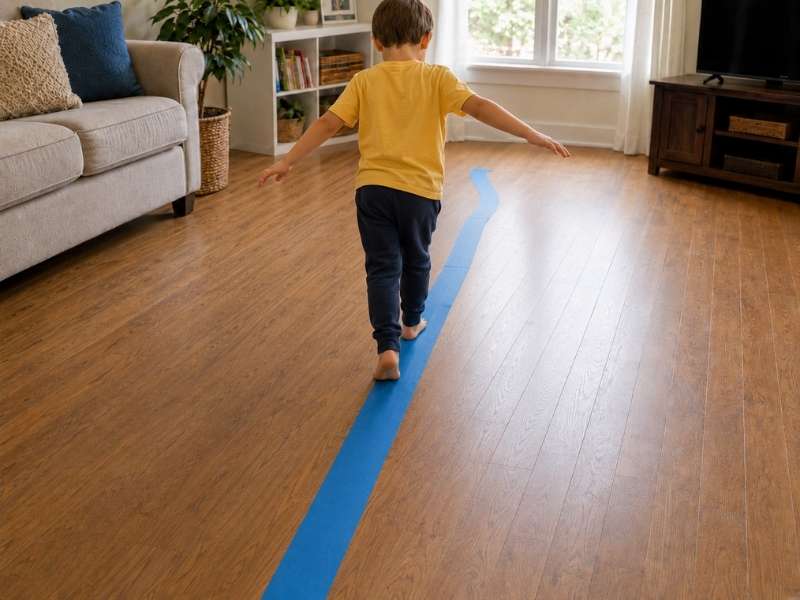
Balancing helps children slow down after crawling while improving coordination.
Create a balance beam using painter’s tape.
Run one long strip across the floor.
Ask children to place one foot directly in front of the other.
Once they master the straight line, make it more interesting.
Turn the tape into gentle curves.
Add zigzags.
Create circles.
Older children can try balancing while holding a stuffed animal.
Younger children may enjoy stretching their arms like airplane wings.
Remind everyone that staying on the line is more important than moving quickly.
The challenge becomes even more exciting when children try to beat their own previous time without stepping off.
If your children enjoy building confidence through hands-on play, How to Make Toddler Sensory Bins That Are Fun, Safe, and Easy to Set Up offers another activity that encourages exploration at their own pace.
7: Finish With a Fun Tossing Challenge
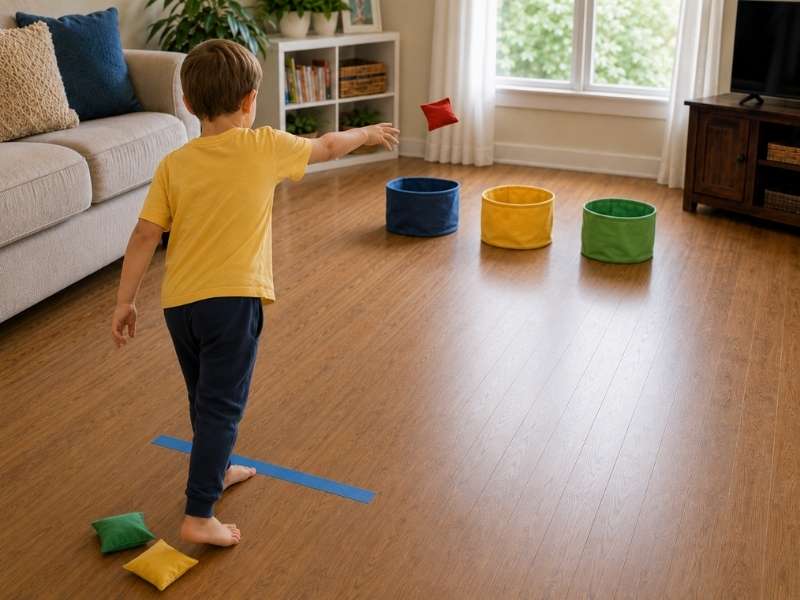
End this section of the course with something that lets children pause before racing to the next obstacle.
Place a laundry basket several feet away.
Give each child three soft balls, rolled-up socks, or beanbags.
The goal is simple.
Throw all three into the basket before moving on.
Adjust the distance based on each child’s age.
Younger children may stand very close.
Older children can take several steps back for a bigger challenge.
This obstacle improves hand-eye coordination while giving children a quick moment to celebrate every successful throw.
If your family enjoys creating games together, you’ll love 31 Cozy Family Movie Night Ideas Kids and Parents Will Absolutely Love, which includes more ways to make time at home feel special.
8: Build a Hopping Challenge
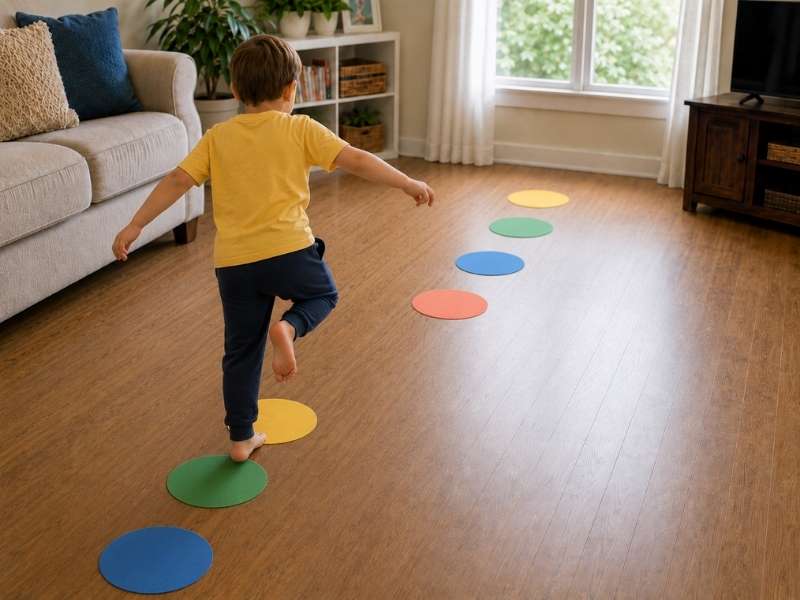
Now it is time to get children moving again.
Place several hula hoops across the floor.
If you do not have hoops, make large circles with painter’s tape instead.
Ask children to hop with both feet inside every circle.
Once they become comfortable, change the challenge.
Hop on one foot.
Jump backward.
Skip every other circle.
You can even call out different colors if you use colored paper circles.
Changing the rules each round keeps the obstacle feeling fresh without adding new equipment.
Children enjoy trying to beat their own score while improving balance and coordination.
If your child enjoys creative movement, Easy Summer Crafts Kids Can Make in 10 Minutes pairs perfectly with an afternoon filled with active play.
9: Create a Balloon Challenge
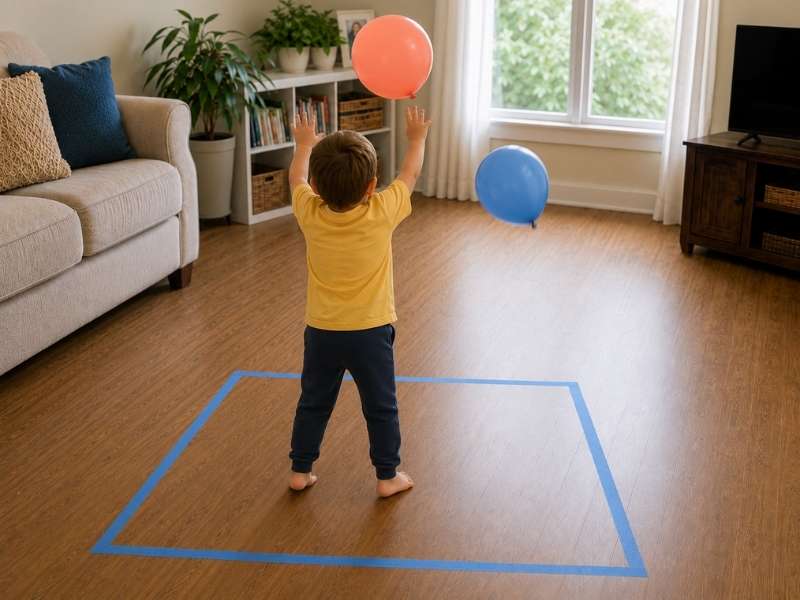
Balloons instantly make an obstacle course feel more exciting.
Blow up one or two balloons and challenge children to keep them in the air while walking from one point to another.
They can only tap the balloon with their hands.
If the balloon touches the floor, they simply start again.
Older children may enjoy balancing the balloon on a paper plate.
Another fun option is asking them to gently carry the balloon between their knees while hopping toward the next station.
Because balloons move unpredictably, every attempt feels different.
Children usually laugh just as much as they compete.
If your family loves balloons for celebrations, 31 Beautiful Balloon Decoration Ideas for Kids’ Parties That Will Absolutely Wow Every Guest offers even more colorful inspiration.
10: Add a Climbing Section
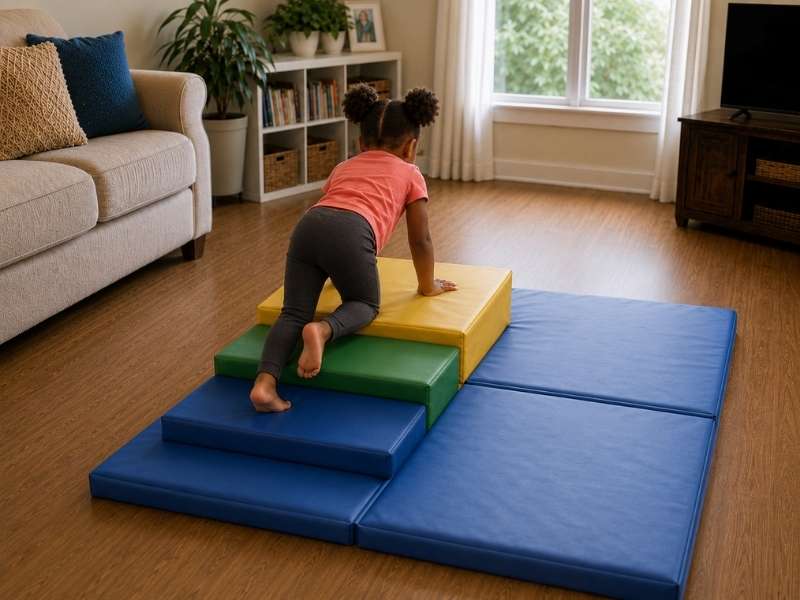
Children naturally enjoy climbing over things.
Create a safe climbing challenge using sofa cushions, folded blankets, or large floor pillows.
Stack everything low enough for children to climb over comfortably.
Avoid making the obstacle too high.
The goal is controlled movement, not speed.
Encourage children to place both hands on each cushion before stepping across.
If several children are playing together, allow only one person on the climbing section at a time.
That keeps everyone safe while giving each child enough room to move confidently.
Pretend they are climbing a mountain before reaching the next adventure.
For children who love imaginative play, 31 LEGO Bedroom Ideas for Creative Builders shows how themed spaces can inspire even more creative adventures.
11: Set Up a Zigzag Run
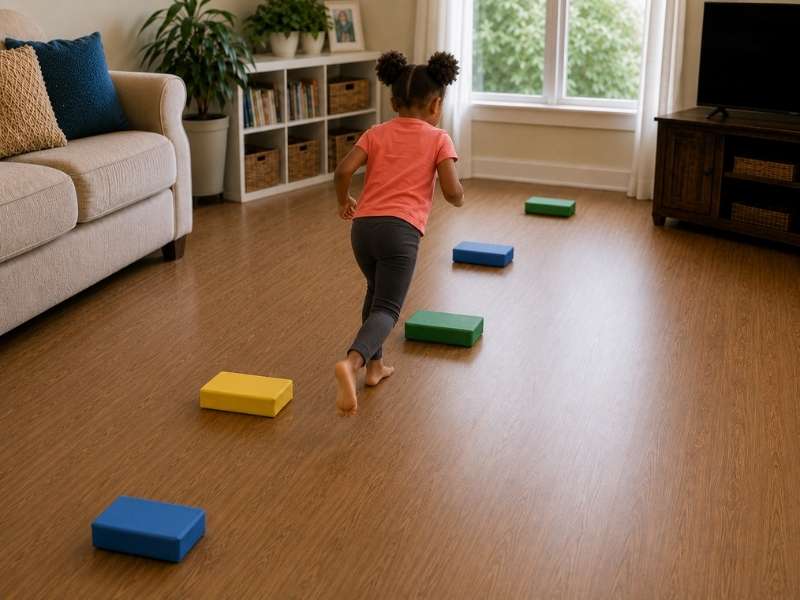
Running in a straight line is easy.
Running around obstacles takes a little more focus.
Place stuffed animals, plastic cups, cones, or empty tissue boxes across the floor.
Leave enough space between each object for children to weave around them.
Challenge them to avoid touching anything as they move.
If they accidentally bump an object, simply return to the beginning of the zigzag section and try again.
Children quickly improve after a few attempts.
This obstacle helps build body control while encouraging careful movement instead of rushing.
If your child enjoys themed adventures, 27 Minecraft Birthday Party Ideas That Feel Straight Out of the Game has plenty of creative inspiration for turning ordinary play into something unforgettable.
12: Include a Simple Puzzle Stop
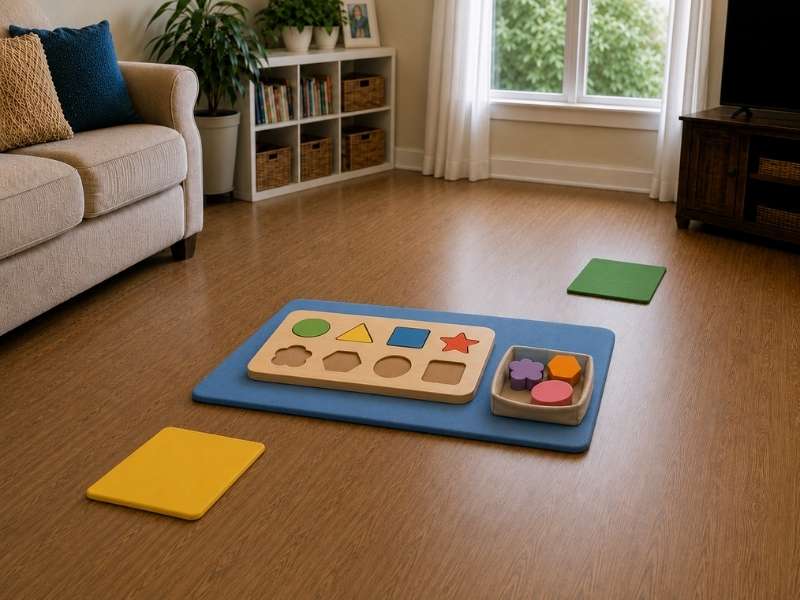
Not every obstacle needs to involve running.
Adding one quiet station creates a nice change of pace.
Place a simple puzzle, shape sorter, or stack of blocks on a small table.
Children must complete one small task before moving forward.
Examples include:
- Stack five blocks.
- Match three colors.
- Finish a four-piece puzzle.
- Build a tiny tower.
The challenge gives children a chance to think before they begin moving again.
It also makes the obstacle course feel more varied from beginning to end.
For more hands-on learning ideas, The Complete Guide to Choosing Age-Appropriate Activities for Children explains how to choose activities that match different ages and abilities.
13: Create a Finish-Line Dash
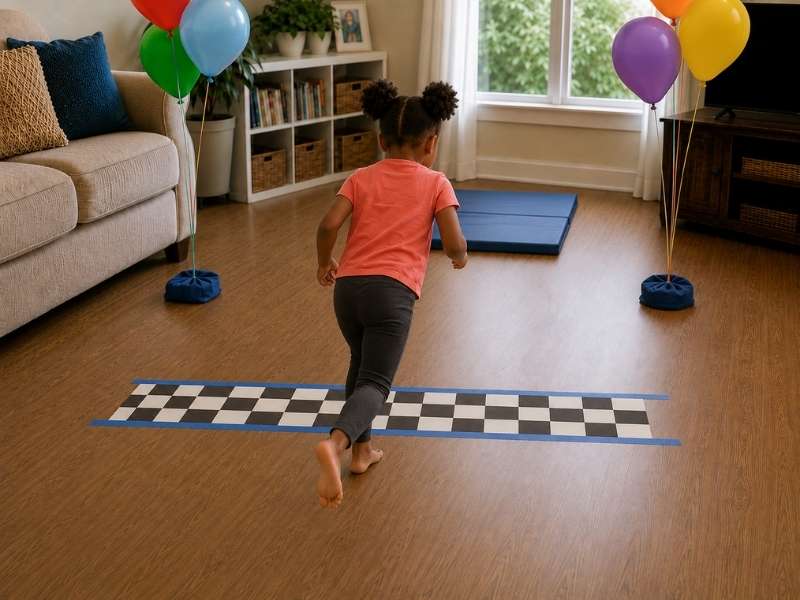
Every obstacle course deserves an exciting ending.
Stretch a ribbon, crepe paper, or lightweight streamer across two chairs.
Children race toward the finish before running through the ribbon.
Celebrate every child who crosses the line.
Clap.
Cheer.
Take photos.
High-five them.
The finish should feel like an achievement instead of simply the end of the course.
Children often ask to start again immediately after crossing the finish line.
That excitement is exactly what keeps the activity engaging.
If your family enjoys celebrating little achievements, The Ultimate Guide to Creating Meaningful Childhood Memories With Kids shares more simple traditions that children remember for years.
How to Make the Course More Fun With Themes
Once children know the basic obstacle course, change the theme instead of rebuilding everything.
Small changes make the activity feel completely different.
Jungle Adventure
Pretend the floor is a river.
The cushions become rocks.
Stuffed animals become jungle creatures.
Children must quietly sneak past them before reaching safety.
If they enjoy animal adventures, 25 Magical Ocean Crafts for Kids That Make Summer Learning Fun offers another themed activity for the same day.
Superhero Training Camp
Children jump, crawl, balance, and climb as though they are training to become superheroes.
Time each round and encourage them to improve their own score rather than compete with others.
Celebrate every improvement, no matter how small.
Pirate Treasure Hunt
Hide a small treasure chest or toy at the finish line.
Each obstacle becomes part of a pirate adventure.
Children cross bridges, avoid sharks, and search for hidden treasure.
This theme works especially well for siblings because everyone enjoys discovering the prize together.
Space Mission
Turn the obstacle course into a mission across the galaxy.
The balance line becomes a space bridge.
The tunnel becomes a rocket.
The balloon challenge becomes floating through zero gravity.
Children usually stay in character the entire time.
If space themes are a favorite, 31 Minecraft Paper Craft Ideas Kids Will Want to Make Immediately also inspires imaginative building sessions after the obstacle course ends.
Common Mistakes to Avoid
Even simple obstacle courses can become frustrating when a few small details are overlooked.
Here are some of the most common mistakes.
Making the Course Too Long
Children can lose interest if the course goes on for too long.
Eight to twelve obstacles usually feel just right.
You can always change or add stations later.
A shorter course also gives children more chances to repeat their favorite sections.
Changing Every Rule at Once
Children learn best when they understand what comes next.
Keep the basic course the same for several rounds.
Then change one obstacle.
Replace the balloon challenge.
Move the tunnel.
Create a different finish line.
Small changes keep the course exciting without making it confusing.
Forgetting Water Breaks
Obstacle courses involve lots of movement.
Keep water nearby, especially during warmer months.
A short break between rounds helps children stay comfortable and ready for another adventure.
After active play, How to Set Up a Fun Backyard Water Play Station With Kids is a wonderful way to continue the fun outside on sunny days.
Focusing Too Much on Winning
Children naturally enjoy challenges.
However, the real goal is moving, laughing, and spending time together.
Avoid comparing siblings or keeping score if it creates frustration.
Instead, celebrate creative ideas, teamwork, and personal improvement.
The happiest obstacle courses usually end with children asking,
“Can we do it again?”
Wrapping Up
Learning how to set up a simple indoor obstacle course for kids is easier than many families expect. A few pillows, chairs, pieces of tape, and everyday household items are enough to create an afternoon filled with movement, laughter, and imagination.
Start with a simple course the first time. Watch how your child plays, then let their ideas shape the next adventure. Before long, you will have a collection of favorite obstacles that children ask for again and again.
The best obstacle course is not the biggest one. It is the one that gets children moving, smiling, solving little challenges, and making happy memories together. Those simple moments often become the stories families talk about long after the cushions have been put away.