Some links on this blog may contain affiliate links. If you make a purchase through one of these links, I may earn a small commission at no extra cost to you. Thank you for supporting Enchanted Kids Moment!
There is a certain kind of kids’ room mess that seems to come back the moment you finish cleaning it. You clear the floor, put the toys away, and somehow LEGO bricks are already under the bed, beside the dresser, and hiding inside a pair of socks.
Listen, LEGO itself usually isn’t the real problem. The problem is what happens when hundreds of small pieces, unfinished builds, minifigures, instructions, and different sets all share one giant box. Your child may know exactly what they want to build, but finding the right wheel, window, plate, or tiny character can mean dumping half the collection onto the floor first.
That is when a bedroom can start feeling messy even when you have plenty of storage.
The solution isn’t always buying a bigger LEGO Storage and Organization box. In many cases, the room needs a storage system that matches how your child actually plays with LEGO. A child who builds every afternoon needs quick access to everyday pieces. A child who keeps large projects for several days needs somewhere safe to leave unfinished builds. And a child who loves minifigures may need a completely different setup from someone who mainly uses basic bricks.
So instead of trying to organize every LEGO piece perfectly, let’s build a system that makes finding, playing, displaying, and cleaning up easier.
The goal isn’t a picture-perfect LEGO room. It’s a room where your child can build without searching through a mountain of pieces and where putting everything away doesn’t feel like starting another project.
If the rest of the room needs a refresh too, you may also enjoy these creative kids room storage ideas for making better use of limited space.
What Is the Best Way to Organize LEGO in a Small Kids’ Room?
If your child has a small bedroom, you do not need a large storage unit to organize LEGO. Start by giving the collection a few clear zones instead of trying to store everything in one place.
Keep frequently used pieces in shallow drawers or small containers near the building area. Use a shelf for favorite creations and a basket for unfinished projects. Less-used sets can go under the bed or on a higher shelf.
Wall space can also help when floor space is limited. Narrow shelves, compact organizers, and wall-mounted storage can keep LEGO accessible without filling the room with furniture.
The goal is not to fit every brick into one storage unit. The goal is to make the pieces your child uses most easy to find while keeping the rest contained.
A room can still feel playful while keeping that structure. For inspiration, take a look at these LEGO bedroom ideas for creative builders and notice how storage can become part of the room design.
How to Transform a Messy Kids Room Using LEGO Storage and Organization
Start by Removing the LEGO That No Longer Gets Used

Before buying bins, drawers, shelves, or organizers, sort through the collection.
This step matters because storage cannot solve a volume problem forever. If your child has outgrown certain sets, broken builds, duplicate pieces, or toys they no longer enjoy, those items may simply take up valuable space.
Begin with one section rather than dumping every LEGO piece onto the floor.
Create separate piles for:
- Pieces your child uses often
- Completed sets worth keeping
- Favorite minifigures
- Rare or special pieces
- Broken or incomplete builds
- Pieces that need sorting
- Items your child no longer wants
Give your child a voice during this process. Some pieces may look insignificant to you but hold a special memory for them.
For more practical ways to reduce visual clutter, these minimalist kids room ideas offer useful inspiration.
Once you remove the pieces nobody uses, the remaining collection becomes much easier to organize.
Decide Whether You Need Open or Closed Storage
The best LEGO storage depends heavily on how your child plays.
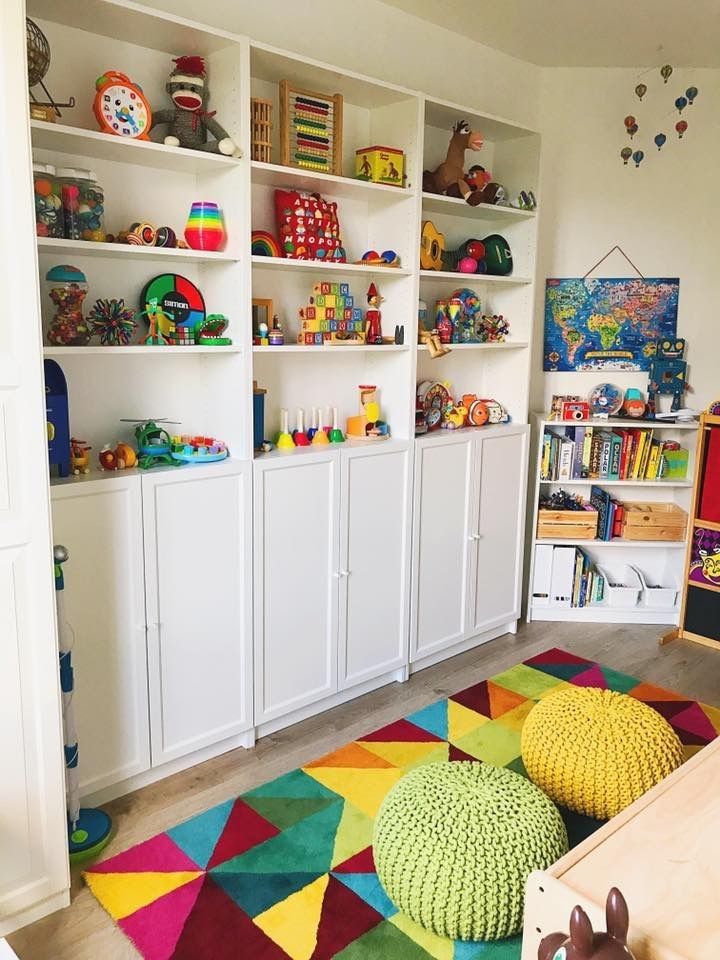
Open storage works well for children who build frequently and need quick access. Baskets, shallow bins, open cubbies, and low drawers let them grab what they need without asking for help.
Closed storage creates a calmer appearance. Cabinets, lidded containers, and drawers hide colorful LEGO pieces when playtime ends.
You can also combine both approaches.
Keep frequently used bricks in accessible drawers while placing completed sets, seasonal builds, and less-used collections higher up.
That balance works particularly well when the room serves several purposes. If your child also needs space for reading, crafts, or quiet play, explore these kids room decorating ideas for ways to combine different activity zones.
Sort LEGO by How Your Child Actually Builds

A perfectly organized LEGO collection means little if your child cannot maintain it.
You do not need to separate every single piece into a tiny individual container. In fact, an overly detailed system can make cleanup harder.
Instead, start with broad categories.
Try separating pieces into groups such as:
- Standard bricks
- Flat plates
- Wheels and vehicle parts
- Windows and doors
- Minifigures
- Technic-style pieces
- Special shapes
- Transparent pieces
- Building accessories
- Unusual or large pieces
If your child builds mainly with colors, you can organize some groups by color instead.
However, shape-based sorting often works better for children who create different types of builds. A child looking for a wheel will probably search for “wheels” rather than remember which color bin contains them.
For families trying to make every inch count, these kids room storage ideas can help you find clever places for smaller containers.
Use Small Drawers for Tiny LEGO Pieces

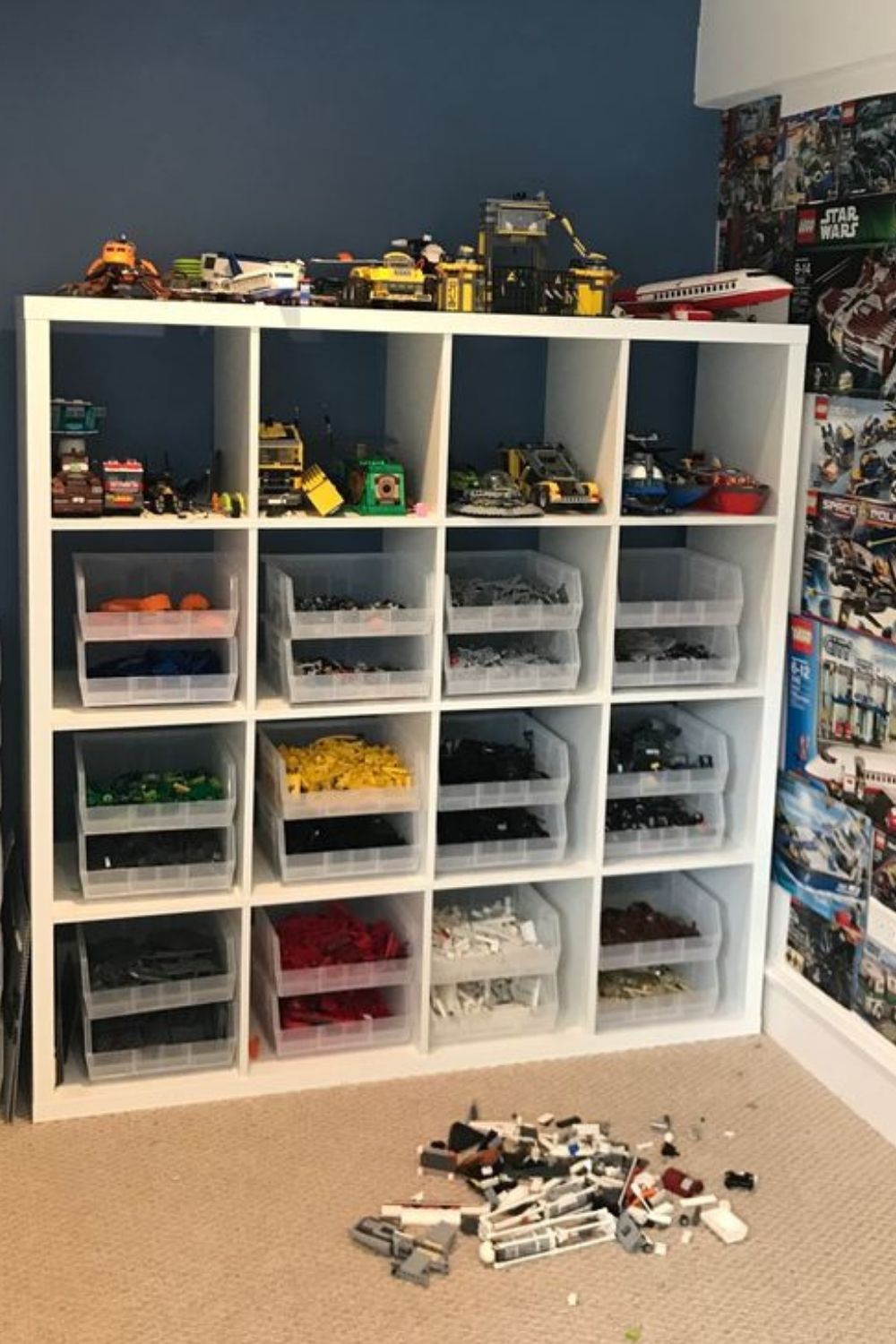
Small drawer organizers can completely change how a LEGO collection feels.
Instead of placing everything inside one deep box, use shallow drawers for pieces your child reaches for often.
You could dedicate one drawer to wheels, another to windows, and another to minifigure accessories.
Transparent drawers offer another advantage because children can see the contents without opening every compartment.
Place the organizer at a comfortable height. Younger children should reach everyday pieces easily, while fragile or valuable builds can stay somewhere safer.
This approach also supports independent cleanup because your child can see exactly where each category belongs.
If you want more ways to create a practical room, consider this guide on how to design a kids bedroom that balances fun and function.
Add Clear Bins for Larger LEGO Collections

Clear bins work especially well for larger categories.
You can use one container for standard bricks, another for plates, and another for larger building components.
The transparent sides make the system easier to understand. Children can quickly scan the contents instead of opening multiple opaque boxes.
Choose containers that stack securely if you need to save floor space.
However, avoid stacking containers your child uses every day too high. A beautiful storage tower becomes frustrating when reaching the bottom box requires moving five others.
For more ideas that help children manage toys independently, check out these toy storage ideas that make cleanup easier for kids.
Create a Dedicated LEGO Building Zone
Storage becomes much easier when you give LEGO its own home.
A small table, desk, or sturdy play surface can become the main building station.
Keep the most-used storage within arm’s reach. Place less frequently used collections nearby but slightly farther away.
This setup creates a natural routine:
Choose → Build → Display → Sort → Store.
The building zone also prevents LEGO from spreading across the entire bedroom.
If your child enjoys several types of creative play, consider pairing the LEGO area with other activities using ideas from this collection of kids room designs that stay clutter-free.
Choose a LEGO Table With Built-In Storage

A LEGO table can combine the building surface and storage area in one piece of furniture.
Look for a design with drawers, removable bins, or compartments underneath the surface.
That arrangement saves space because you do not need a separate table and storage unit.
A table also gives your child a clear boundary for building. Pieces can stay around the workspace without taking over the bed, reading corner, or walking area.
If your child shares the room, a dedicated building station can also help define personal play areas. These shared bedroom ideas for girls offer useful inspiration for creating separate zones within one room.
Turn Shelves Into LEGO Display Areas
Not every LEGO creation needs to disappear into a storage bin.
Some builds deserve to stay visible.
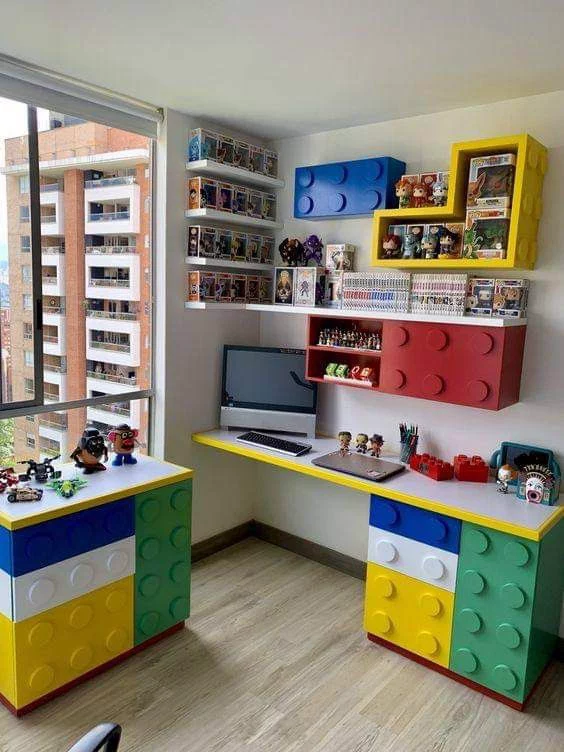
Use floating shelves, narrow picture ledges, cube shelves, or wall-mounted display units for favorite creations.
A few displayed builds can make the room feel personal without creating visual overload.
Rotate the displays when your child finishes something new. That way, the shelves remain special instead of becoming another crowded surface.
You can also create a “build of the week” area where your child chooses one favorite creation to showcase.
For another creative way to personalize a child’s space, browse these viral kids room decoration ideas.
Give Minifigures Their Own Storage
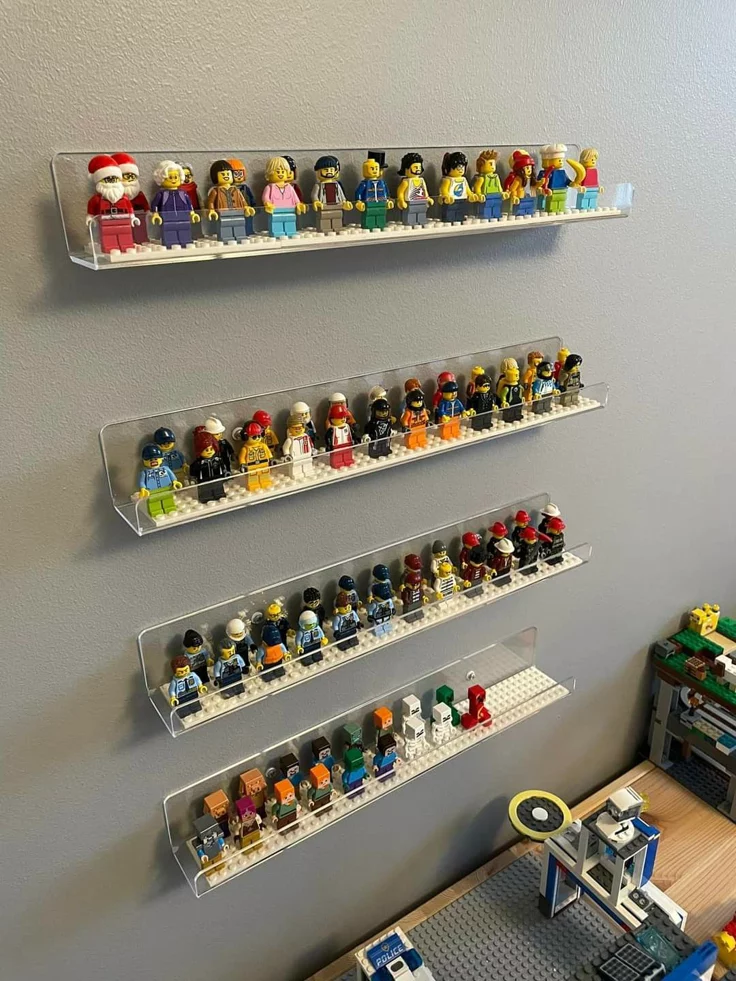
Minifigures often create a completely different organization problem.
They are small, easy to lose, and often have tiny accessories that disappear quickly.
A shallow compartment organizer can keep figures separated from loose bricks.
You can also use a small display shelf for favorite characters.
Avoid putting all minifigures into one deep container. Finding one character becomes difficult when dozens of figures pile together.
Instead, group them by theme, collection, or how often your child uses them.
If your child enjoys themed spaces, these Toy Story-inspired kids bedroom ideas show how a favorite interest can influence the room without overwhelming it.
Label Every LEGO Storage Container
Labels can make cleanup dramatically easier.
For younger children, combine simple words with pictures.
A label could say WHEELS with a small wheel image. Another could say BRICKS with a basic brick symbol.
Older children may prefer text-only labels.
Use removable labels if your system changes often. LEGO collections evolve, and today’s “vehicles” bin might become tomorrow’s “special pieces” bin.
Place labels where children can see them while standing in front of the storage unit.
That small detail helps turn organization into a repeatable habit rather than something an adult has to manage.
If your child needs a broader toy reset, these budget-friendly kids room ideas can help you organize without replacing everything.
Use a Rolling Cart for Active LEGO Projects
Some LEGO projects take days or even weeks to finish.
That creates a common problem: Where does the unfinished build go?
A rolling cart offers a simple answer.
Use one level for the current build, another for pieces connected to that project, and another for instructions or accessories.
When playtime ends, roll the cart into a corner instead of dismantling everything.
This solution works particularly well for children who dislike stopping halfway through a complicated creation.
It also protects unfinished builds from getting knocked over during bedtime or room cleaning.
For families working with smaller rooms, these smart IKEA kids room ideas for small spaces can inspire compact storage solutions.
12. Create a “Current Projects” Basket
You do not always need another piece of furniture.
A simple basket can hold unfinished projects and their loose parts.
Choose a wide, shallow basket so your child can see inside.
Give each project its own smaller tray if several builds happen at once.
This system prevents half-built vehicles, houses, and characters from mixing together.
Most importantly, your child can pause one project without losing the pieces needed to continue later.
Keep LEGO Instructions in One Place

Instructions often become part of the clutter.
Paper booklets can end up under beds, inside drawers, or mixed with unrelated toys.
Create one dedicated folder, magazine holder, or document box for them.
You can organize the instructions by theme or set number.
If your child uses digital instructions, create a dedicated tablet spot near the LEGO station.
This small change keeps the building area focused and makes finished sets easier to rebuild.
A consistent routine also works well alongside other indoor DIY activities and crafts for kids.
Use the Floor Strategically
The floor often becomes the largest LEGO work surface, especially when children build elaborate structures.
Instead of fighting that habit, create a defined floor-building area.
A washable play mat can mark the space while giving small pieces a softer surface.
Choose a mat with enough room for your child’s typical builds.
When play ends, use the mat as the visual boundary for cleanup. Every LEGO piece should leave the mat before the room returns to normal.
That simple boundary can prevent LEGO from creeping under furniture and into other parts of the bedroom.
Add a LEGO Sorting Tray
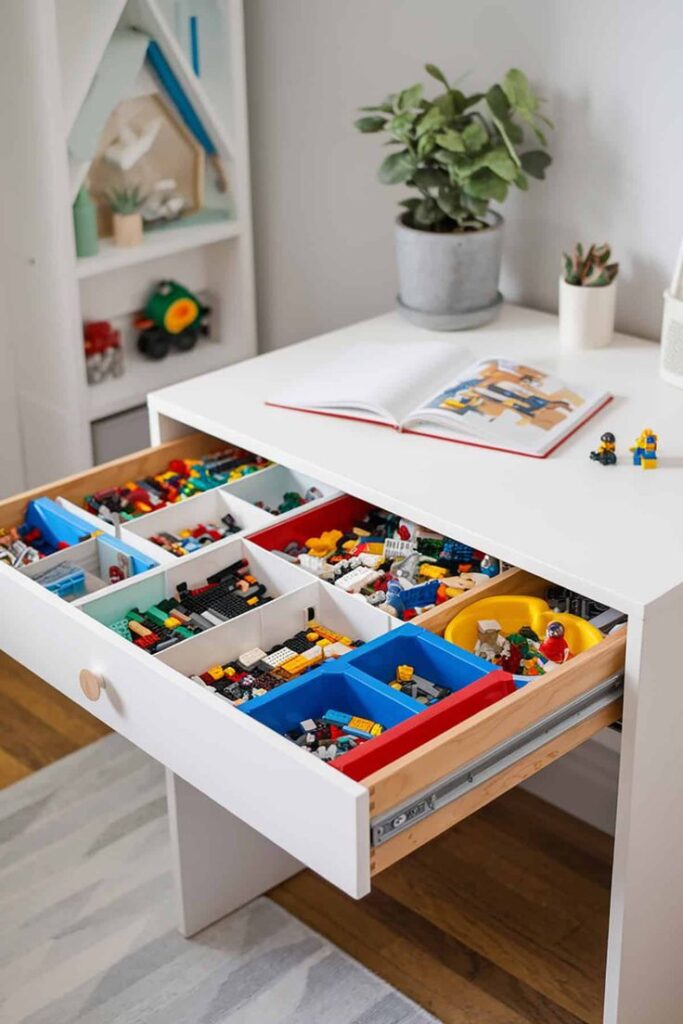
Sorting trays can make large collections easier to manage.
Choose a tray with several sections if your child enjoys organizing pieces before starting a project.
For example, one section could hold wheels, another could hold plates, and another could hold small decorative pieces.
A tray also works well when your child wants to build away from the main LEGO table.
Just remember to return everything to its proper storage area after the project ends.
If your child enjoys hands-on creative projects beyond LEGO, you can also create a separate craft station inspired by these easy summer crafts kids can make.
Make Storage Easy to Reach
A storage system can look beautiful and still fail if children cannot use it independently.
Place everyday LEGO storage between your child’s shoulder and knee level.
Keep heavy containers low. Store fragile builds higher up.
Avoid putting frequently used pieces inside difficult-to-open boxes.
The easier the system feels, the more likely your child will use it without constant reminders.
Accessibility matters just as much for other room zones. These kids room storage ideas that maximize every inch can help you plan the entire space around your child’s reach.
Keep Special Sets Separate From Loose LEGO

Not every LEGO collection needs the same storage method.
If your child has a favorite completed set, consider keeping its pieces together.
A labeled box can hold the set, spare pieces, and instructions.
That way, your child does not have to search through thousands of loose bricks when they want to rebuild it.
You can also create a “special builds” shelf for sets that deserve display time.
This approach protects meaningful creations while allowing everyday LEGO to remain available for free building.
Use Under-Bed Storage for Overflow
Under-bed storage can help when the bedroom lacks floor space.
Choose shallow containers that slide easily beneath the bed.
Reserve this area for less frequently used LEGO rather than pieces your child grabs every day.
For example, seasonal sets, old collections, or large specialty pieces can live underneath.
Keep everyday storage closer to the building area.
That arrangement reduces unnecessary movement around the room while keeping overflow under control.
Give Every LEGO Category a Visual Home

Once you choose your categories, keep them consistent.
Bricks should return to the same drawer each time. Wheels should always have the same container.
Minifigures should not move between five different storage spots.
Consistency makes cleanup predictable.
Over time, your child should be able to put pieces away without stopping to ask where they belong.
That habit can also support organization across the rest of the bedroom.
For more inspiration, explore these toy storage ideas that make cleanup easier for kids.
Use Wall Space When the Floor Feels Crowded

A messy LEGO room often needs more vertical storage rather than more floor furniture.
Wall-mounted shelves can hold completed builds. Pegboards can organize tools or small containers.
Narrow shelves can display minifigures without using a desk.
However, keep heavier storage securely mounted and place child-accessible items at safe heights.
A good wall system should free the floor while keeping important pieces within reach.
If you are planning a larger room makeover, these kids bedroom ideas that balance fun and function can help you decide where each zone belongs.
Create a Display-and-Storage Combination

You do not have to choose between displaying LEGO and hiding it.
Combine both.
Use open shelves for finished creations and closed drawers for loose pieces.
The result feels more like a designed bedroom than a toy storage area.
Your child’s favorite creations become part of the decor, while the small pieces stay contained.
This combination also gives the room a clear visual rhythm.
You can even turn the label-making process into a small creative project using ideas from these paper crafts kids can make.
Organize Around the Child’s Favorite Builds
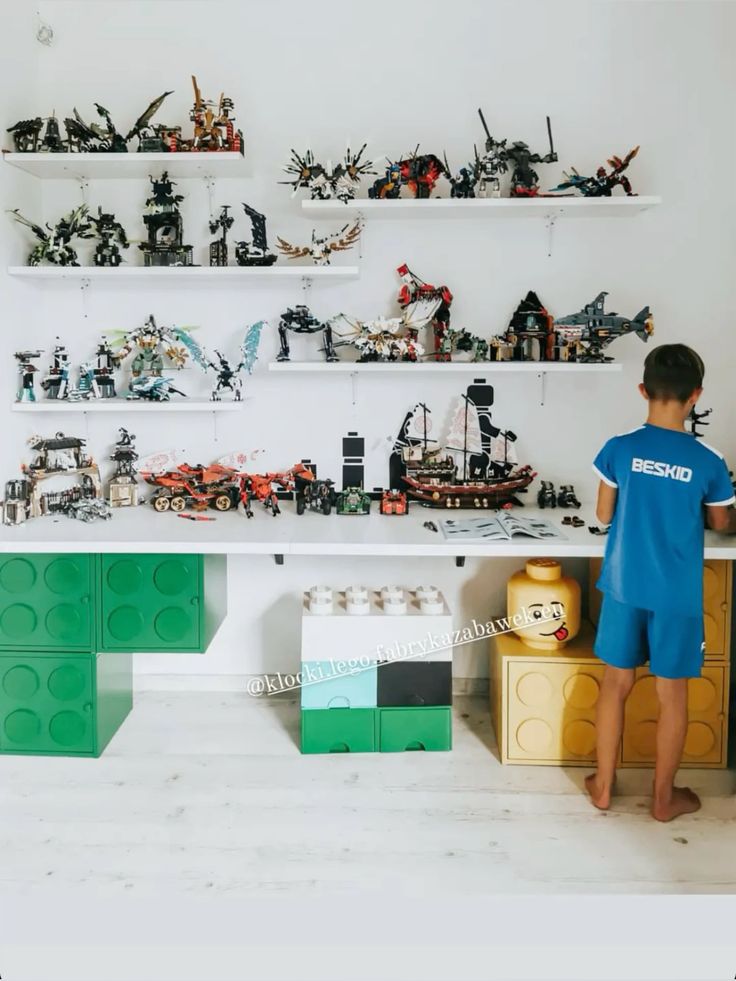
Look at what your child builds most often.
If vehicles dominate the collection, give wheels, windows, steering pieces, and vehicle accessories priority.
For castle builders, keep doors, windows, minifigures, and decorative elements nearby.
A child who builds houses may need quick access to plates, windows, doors, and roof pieces.
The system should support the kind of creativity already happening in the room.
That makes organization useful rather than decorative.
That same principle can make a craft corner more enjoyable. These creative ceramic painting ideas for kids offer another example of creating space for hands-on creativity.
30. Give the Room a Final Visual Reset
Once the LEGO collection feels manageable, look at the entire room.
Can you walk comfortably without stepping over toys?
Does the building area feel inviting?
Can your child reach the everyday storage?
Do finished creations have somewhere special to go?
Are the remaining surfaces useful rather than overloaded?
Small changes can make a surprisingly big difference.
You may discover that the room does not need a complete makeover. It simply needs clearer zones and storage that supports the way your child actually uses the space.
For a broader organization refresh, these 33 minimalist kids room designs can provide ideas for keeping the finished space visually calm.
A Quick LEGO Storage Safety Check
Finally, make sure storage does not block doors, windows, walkways, or other important areas of the room.
Before finishing your organization system, check that storage works safely for your child’s age and the room’s layout.
Keep heavy containers on lower shelves so they are less likely to fall. Secure wall-mounted shelves and organizers properly, especially when they hold multiple LEGO sets.
Small LEGO pieces can also be a choking hazard for younger children. Keep loose pieces away from babies and toddlers who may put objects in their mouths.
Final Thoughts
A messy LEGO room does not mean your child lacks organization skills. It often means the storage system does not match the way they play.
Once you separate everyday pieces, special parts, unfinished projects, and finished creations, the room becomes easier to manage.
Clear bins can make pieces visible. Small drawers can handle tiny parts. Shelves can turn favorite builds into decor, while a simple project basket can protect creations that are still underway.
Most importantly, give your child a system they can understand and use independently.
The goal isn’t a picture-perfect room where every LEGO brick stays untouched. Instead, aim for a creative space where building can happen freely and cleanup doesn’t feel overwhelming.
When every piece has a sensible home, the floor becomes easier to clear, the shelves become more intentional, and your child can get back to what LEGO does best: building something wonderful from a pile of tiny pieces.