Some links on this blog may contain affiliate links. If you make a purchase through one of these links, I may earn a small commission at no extra cost to you. Thank you for supporting Enchanted Kids Moment!
Every time I walk into a child’s bedroom or playroom, I almost expect to find a surprise waiting for me. Maybe it’s a trail of LEGO bricks leading to the bed, stuffed animals piled on the chair, or puzzle pieces scattered across the floor like tiny treasures. If you have kids, I’m sure you’ve seen it too. They can spend hours happily building, pretending, and creating, but when playtime ends, cleaning up is usually the last thing on their minds.
The toys are everywhere, the kids are still having fun, and suddenly you’re left wondering where the floor disappeared. Asking children to clean up often turns into a daily battle filled with reminders, negotiations, and the familiar phrase, “I’ll do it later.” Before long, tidying the room feels like another chore added to your own never-ending to-do list.
But here’s something interesting I’ve noticed. Walk into a room with simple, kid-friendly toy storage ideas, and something changes. Children seem to know exactly where things belong. They can grab what they want, enjoy playing, and, more often than not, put everything back without needing constant reminders. It isn’t because they’re suddenly more disciplined. The room simply makes cleaning up easier.
That is the real secret behind successful toy storage. It has very little to do with strict rules and almost everything to do with creating a space that works the way children naturally think, play, and move. When toys have an obvious home and storage feels easy instead of overwhelming, kids become much more willing to help. Cleanup starts feeling like part of play instead of a punishment after it.
In this guide, you’ll discover practical toy storage ideas that real families can actually use. From budget-friendly bins and clever shelving to simple labeling systems and easy organization tricks, these ideas help reduce clutter without taking the fun out of childhood. Whether you’re organizing a small bedroom or a busy playroom, you’ll find plenty of inspiration to create a space that looks tidy, feels welcoming, and encourages kids to become more independent every day.
You may also enjoy: 25 Creative Kids Room Storage Ideas That Maximize Every Inch of Space
Why the Right Toy Storage System Changes Everything
Before jumping into specific ideas, it helps to understand what makes a storage system actually work for children rather than just for the adults looking at it.
Kids need storage that is accessible, visual, and simple. If a child has to open three drawers, move a chair, and climb on a stool to put something away, it will not go away. It will land on the nearest flat surface. But if the bin is at their eye level, clearly labelled with a picture, and easy to reach with one hand, putting the toy away takes less effort than leaving it on the floor.
This is the core idea behind every effective toy storage system. The path to tidying up must always be easier than the alternative. Design for the child, not for the catalogue photo.
The other piece that makes a real difference is ownership. When children help choose their storage, help label it, and understand where things belong, they feel a sense of responsibility for that space. That sense of ownership is one of the most powerful things you can build into a room. It turns cleanup from something that happens to them into something they are part of.
Simple systems also tend to outlast complicated ones. A toy storage setup that looks stunning in a showroom but requires constant maintenance will fall apart within a week. The best toy storage ideas are the ones that still work six months later when enthusiasm has settled into routine.
Looking for a calmer, clutter-free style? 25 Minimalist Kids Room Ideas That Stay Organized and Beautiful
Some toy storage ideas that will help your child cleanup includes:
Start With a Toy Audit Before You Organise Anything
The most common mistake families make before setting up toy storage ideas is skipping this step completely. You cannot organise chaos. You need to reduce it first.
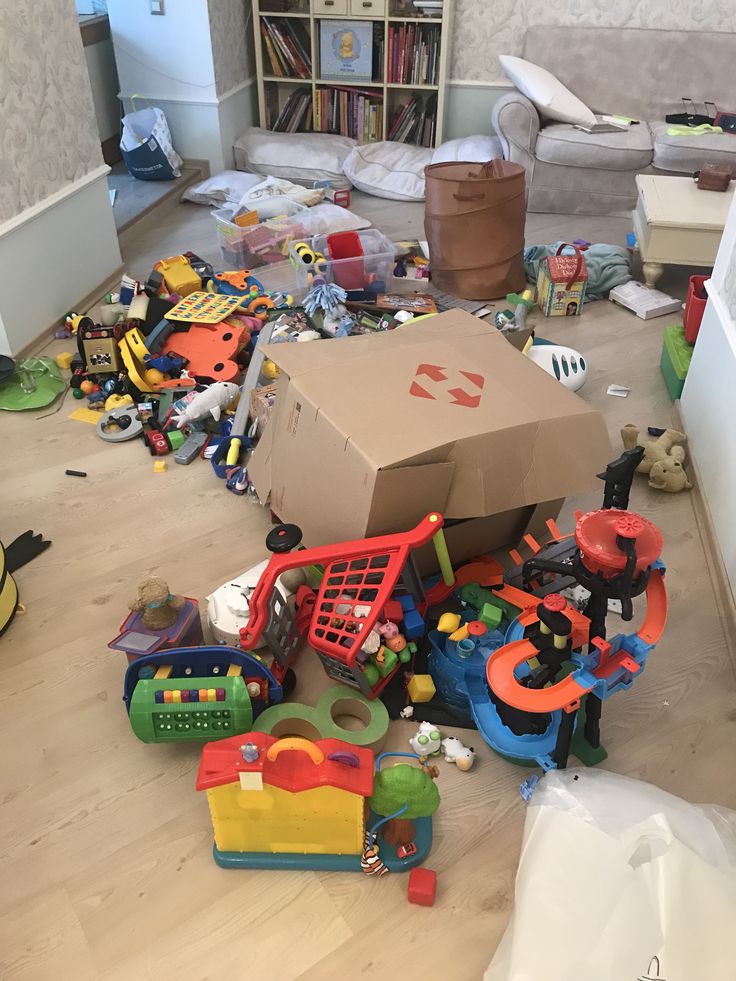
A toy audit means going through every toy in the house and making intentional decisions before you buy a single bin. Pull everything out, sort it into categories, and look honestly at what your children actually play with. You will almost certainly find toys that never get touched, toys that are missing pieces, and toys that belong to a younger stage your child has already moved through.
Sort Into Three Simple Piles
Keep, donate, and remove. The keep pile should only include toys your children genuinely play with and love. The donate pile goes to families or organisations who will get real use from those items. The remove pile covers broken, incomplete, or outgrown items that have simply run their course.
Once you complete this process, the storage problem often shrinks significantly. A room with fewer, better-chosen toys is dramatically easier to keep organised than one bursting with everything that has accumulated over years.
Rotate Toys to Keep Interest High
One of the most underused toy storage ideas is toy rotation. Instead of displaying every toy your child owns simultaneously, keep a portion stored away and swap them out every few weeks. This approach does two things. It reduces clutter in the active play space, and it makes familiar toys feel new again when they reappear.
Children engage more deeply with a smaller selection of toys than they do with an overwhelming collection. Toy rotation is worth trying even before you invest in new storage solutions, because you might discover that the room works beautifully with half the toys out at once. 25 Creative Kids Room Storage Ideas That Maximize Every Inch of Space has some brilliant ideas for storing the rotated toys in ways that keep them accessible to you but out of the everyday play zone.
The Best Toy Storage Ideas for Different Types of Toys
Different toys need different storage solutions. A bin system that works brilliantly for stuffed animals will not work for LEGO. Thinking about storage by toy category helps you choose the right container for each type.
Open Bins and Baskets for Easy Grab-and-Go Play
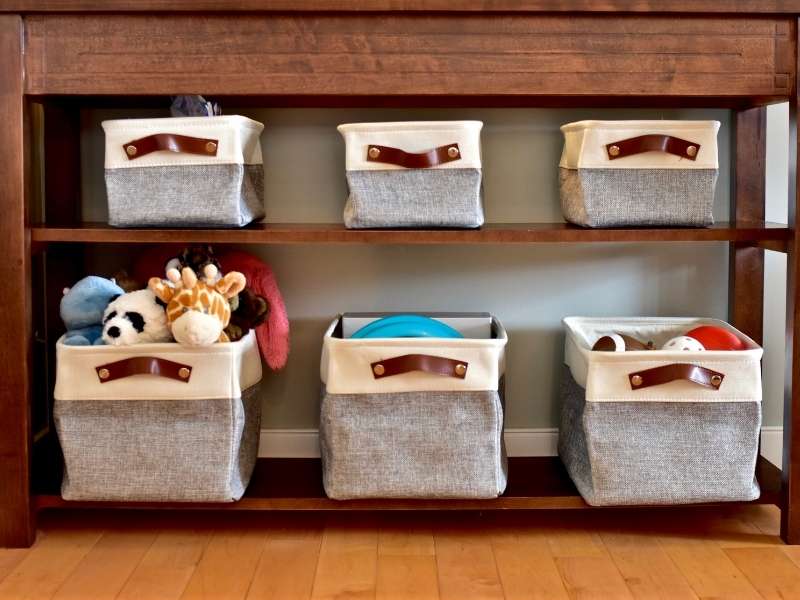
Open bins and baskets are the foundation of almost every successful toy storage setup for young children. They require zero fine motor skill to operate, they are visible at a glance, and they are fast to use in both directions. Getting a toy out and putting it back both take about two seconds.
Choose bins in a size appropriate to the toys going in them. Oversized bins become a dumping ground where everything ends up in one place and nothing can ever be found. Smaller, category-specific bins keep things sorted and make cleanup faster because children know exactly where each thing belongs.
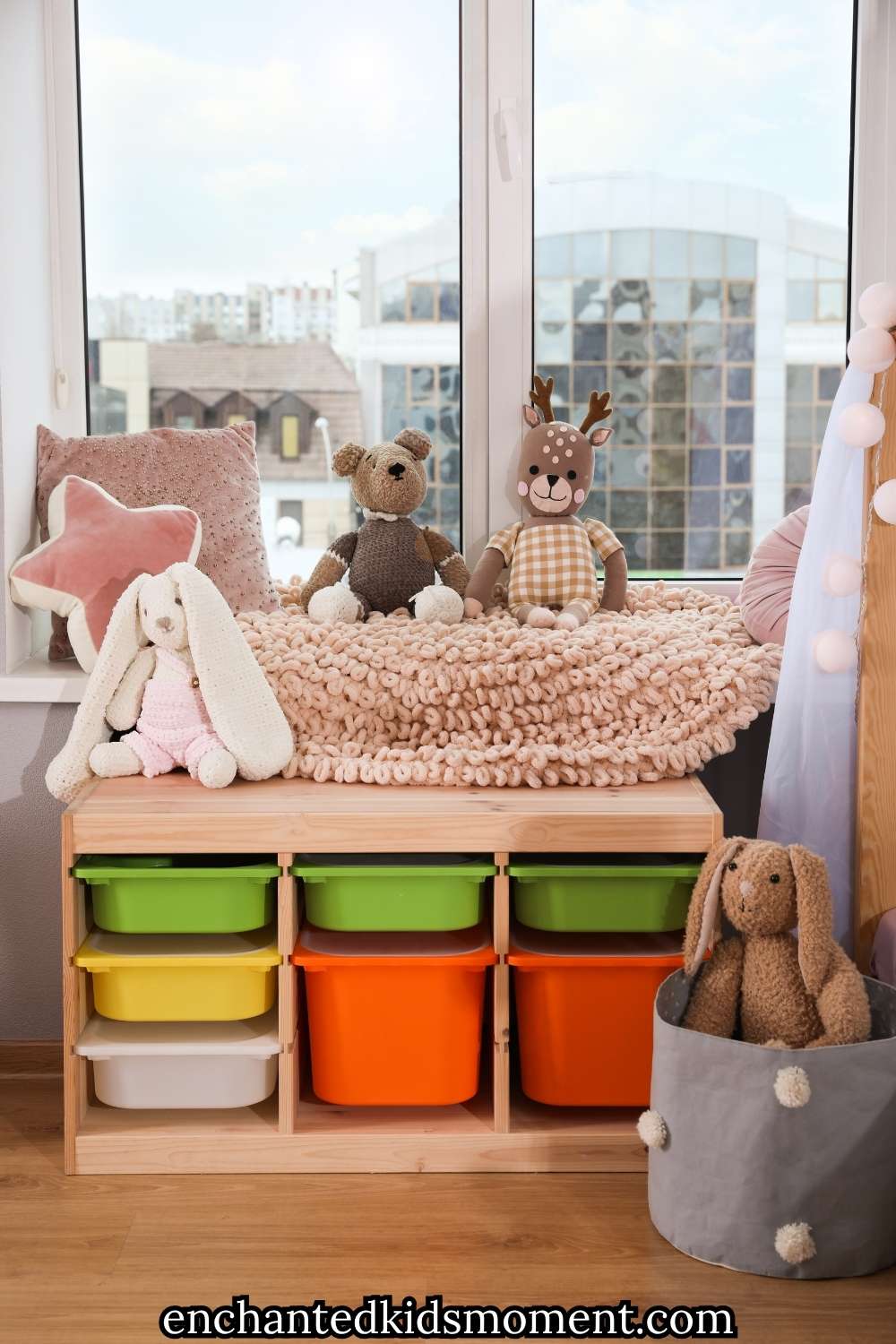
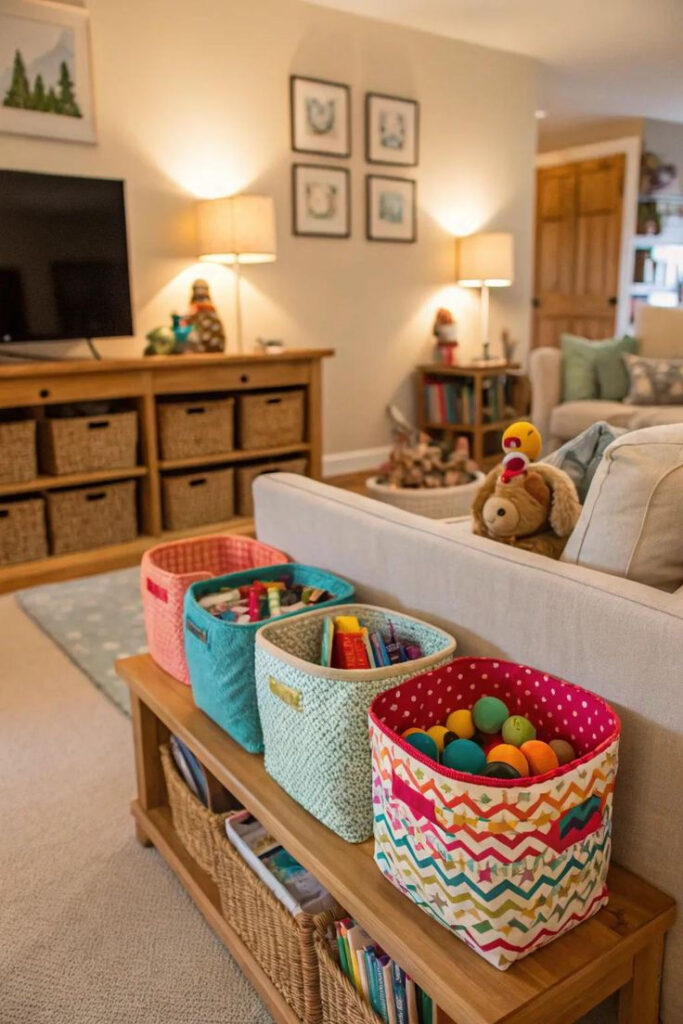
Woven baskets add warmth and texture to a room. Fabric bins in coordinating colours look intentional and inviting. Clear plastic bins let children see the contents without reading a label. Each option works well depending on the age of the child and the aesthetic of the room. What matters most is that the bins are low enough for your child to reach independently.
Clear Containers for Small Parts and Sets
Small toy sets, LEGO collections, craft supplies, and puzzle pieces all benefit from clear containers. When children can see exactly what is inside without opening anything, they are more likely to find what they want and more likely to put it back where it came from.
Stackable clear containers with secure lids work particularly well for LEGO because they keep pieces sorted by colour or size without spilling everywhere when the container is moved. They also stack neatly on a shelf, which keeps the visual look of the room much calmer.
For puzzles, consider using zip-lock bags inside a lidded box or dedicating one clear bin per puzzle. Keep all the pieces together and label each bag with a photo of the completed puzzle so children can match pieces to the right place independently.
Dedicated Spaces for Stuffed Animals
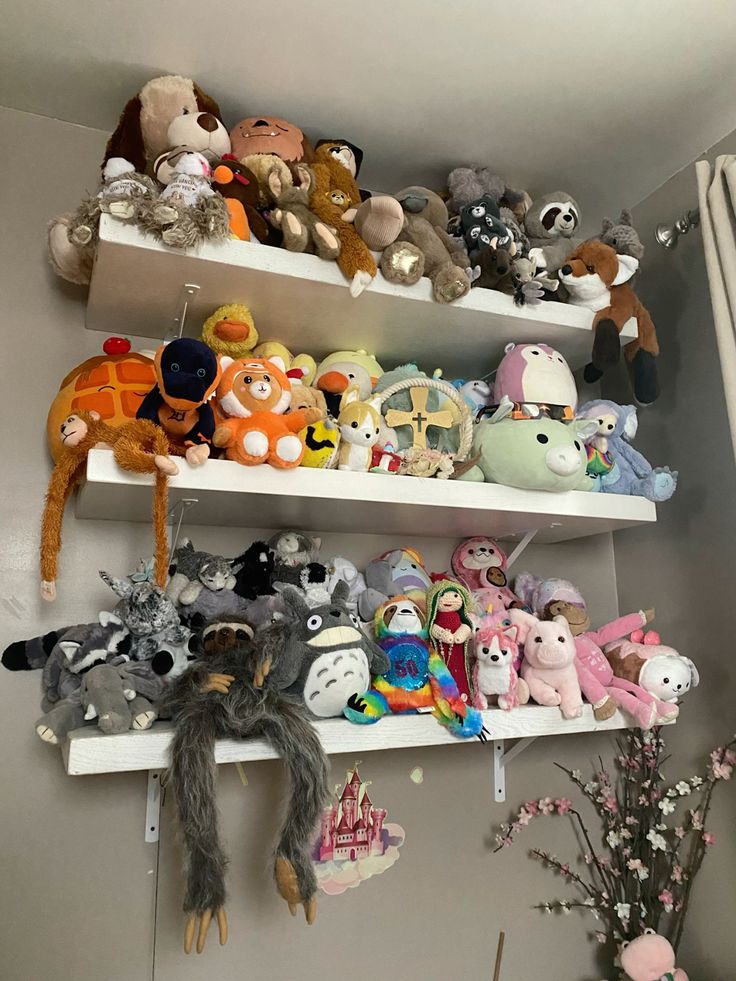
Stuffed animals multiply in almost every child’s room, and they need a home that feels right for what they are. Bean bag chairs with built-in animal storage are a popular choice because they serve a dual purpose. A rope hammock in the corner keeps stuffed animals displayed and accessible without taking up floor space. A large, deep basket gives kids a place to toss their collection quickly during cleanup.
The key with stuffed animal storage is capacity. Whatever system you choose, make sure it can hold the full collection comfortably. An overfull hammock tips toys out onto the floor. An overfull basket leads to piles on top rather than toys inside.
Art Supply Storage That Stays Organised
Creative supplies deserve their own dedicated area. When art supplies live in their own clearly defined space, children can access them independently and cleanup happens in a natural, defined zone.
A rolling cart keeps supplies mobile and easy to put away after a creative session. Open cups or small containers for crayons, markers, and pencils make grabbing supplies fast and putting them back even faster. Flat, shallow drawers work well for paper and colouring books because they prevent curling and dog-earing. Fun and Creative Ceramic Painting Ideas That Encourage Creativity in Kids shows how creative activities can feel magical and special when the supplies are ready and accessible rather than buried at the bottom of a disorganised drawer.
Labelling Systems That Actually Work for Kids
Labels transform a storage system from one that adults maintain to one that children can use independently. The right labelling system depends on the age of the child, but the principle stays the same across every age group. Every container needs a clear signal about what belongs inside it.
Picture Labels for Toddlers and Preschoolers
Children who are not yet reading need picture labels. Print or draw a simple image of the toy category and attach it to the front of each bin. A photo of blocks on the block bin. A photo of a stuffed bear on the stuffed animal basket. A photo of a puzzle piece on the puzzle container.
Picture labels do not need to be elaborate. A photo printed from your phone and taped to the front of a bin works perfectly well. What matters is that the image is clear, simple, and matches exactly what goes inside.
Word Labels for Emerging Readers
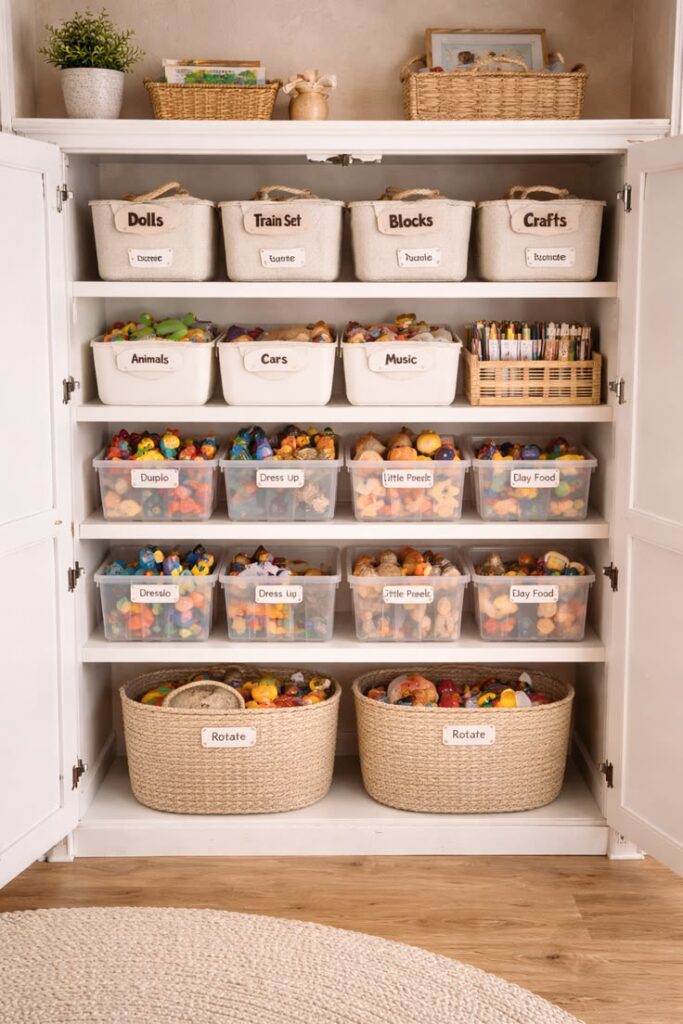
As children begin to read, word labels serve double duty. They organise the space and give children consistent practice reading real words in a meaningful context. Simple, large-print labels that name the category clearly are enough.
You can combine pictures and words during the transition period. This gives children who are learning to read both a visual and a text cue, and it supports the development of early literacy without any extra effort.
Colour Coding for Multi-Child Households
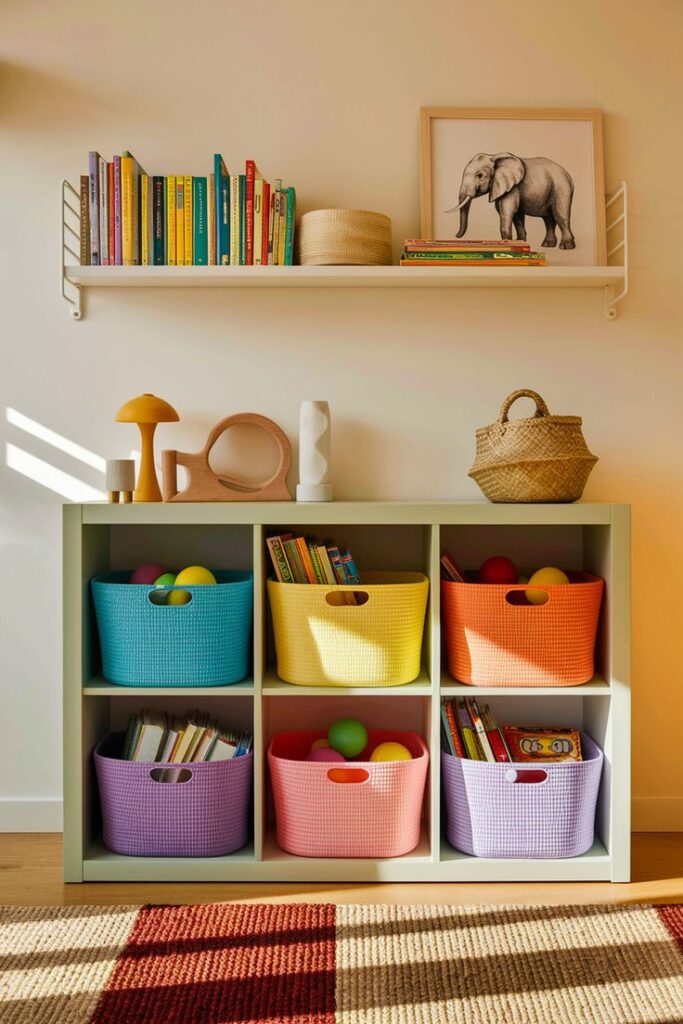
Colour coding adds another layer of clarity in rooms shared by multiple children. Assign each child a colour and use that colour for all of their bins, labels, or containers. Blue bins belong to one child. Red bins belong to another. This eliminates the daily negotiation over what belongs to whom and makes putting things in the right place instinctive.
Colour coding also works well for toy categories. All the building toys live in green containers. All the art supplies live in yellow containers. The system becomes visual and spatial rather than requiring children to read or remember rules. 23 Shared Nursery Ideas That Make Room Sharing Feel Cozy and Special explores how to create individual identity within a shared space, which pairs beautifully with a colour-coded storage approach.
Room Layout and Furniture That Makes Cleanup Natural
The physical layout of a playroom affects cleanup habits more than most people realise. A room where the storage is near the play area will always produce better tidying habits than one where toys need to travel across the room or down a hallway to reach their home.
Store Toys Near Where They Get Used
Match storage to the activity zones in the room. Books belong near the reading corner. Art supplies belong near the craft table. Building toys belong near the floor space where construction happens. When the bin is three steps away from where the toy gets played with, putting it back requires almost no effort.
This principle of proximity is simple but powerful. Think about where each toy naturally ends up after play and put its home there. How to Design a Kids Bedroom That Balances Fun and Function takes this idea further with a full guide to designing a room around the way children actually live and play in it.
Low Shelving and Accessible Storage
Everything a child is expected to put away independently must be within their reach. Floor-level shelves, low cube units, and open racks that sit at a child’s shoulder height are ideal. Drawers are fine, but only if the child can open and close them without assistance.
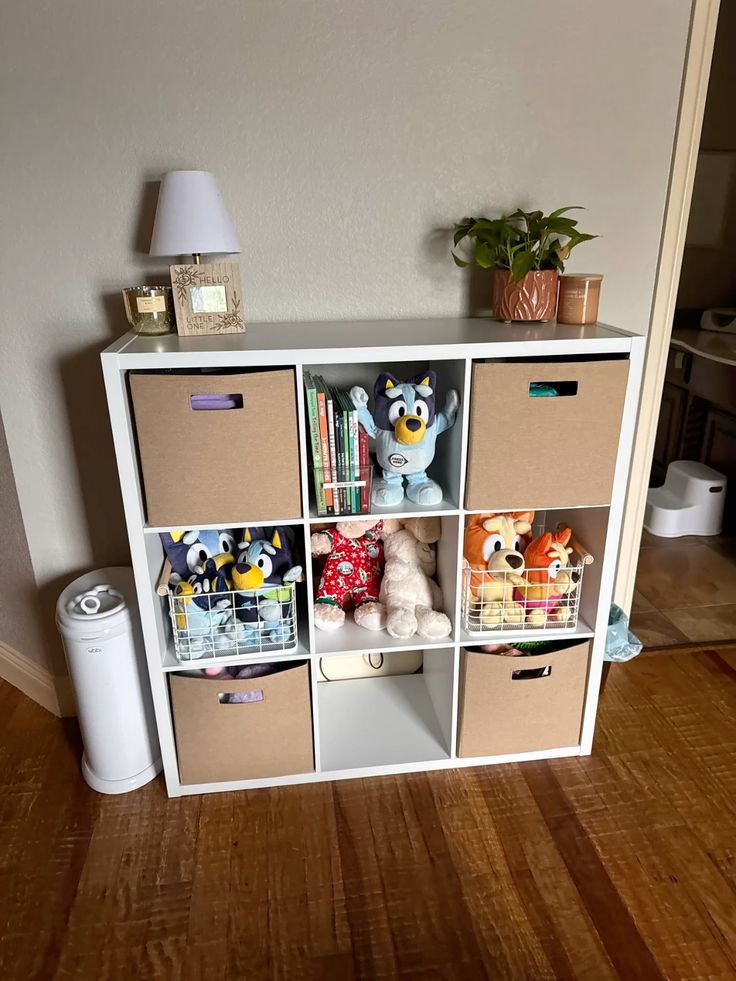
High shelves and locked cabinets are perfect for storing toys on rotation or for items that require adult supervision. But the daily-use storage must always live in the child’s zone. A step stool can help bridge small gaps, but the less effort a child needs to expend, the more consistently they will put things away.
A Tidy-Up Trigger at the End of Play
Creating a consistent end-of-play routine turns cleanup from an argument into a habit. A two-minute tidy-up song, a specific signal like a chime or a bell, or a visual timer that children can see counting down all work as cleanup triggers.
Children thrive on predictability. When they know that a certain signal means it is time to tidy up, they shift into that mode more readily than when cleanup feels random or unexpected. Pair the routine with a storage system they can actually manage independently and the whole process becomes much smoother.
The goal is never a perfectly pristine room. The goal is a child who knows how to participate in caring for their own space. That skill stays with them long after the toys themselves have been outgrown. 33 Pinterest-Inspired Kids Room Decorating Ideas is full of beautiful room setups that combine smart organisation with genuine warmth and playfulness.
Toy Storage Ideas for Small Spaces
Not every family has a dedicated playroom. Plenty of children play in living rooms, bedrooms, or shared spaces where toys need to coexist with the rest of family life. Small-space toy storage requires a different approach, but the core principles still apply.
Multi-Purpose Furniture With Hidden Storage
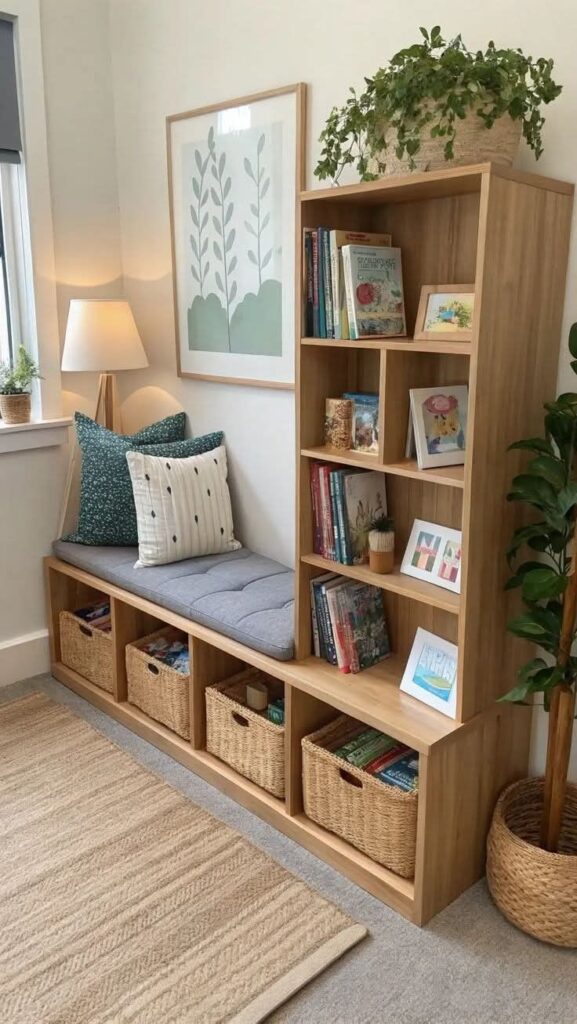
Ottoman storage is one of the most practical small-space toy storage ideas available. A large ottoman with an internal storage compartment sits in the living room as furniture and quietly holds a significant quantity of toys behind closed doors. At the end of the day, everything goes in, the lid closes, and the room looks like a living room again.
Beds with built-in drawers or under-bed storage containers hold toys neatly out of sight while keeping them accessible during play. A bench with a hinged seat at the end of a bed serves the same dual purpose.
Wall-Mounted Storage Solutions
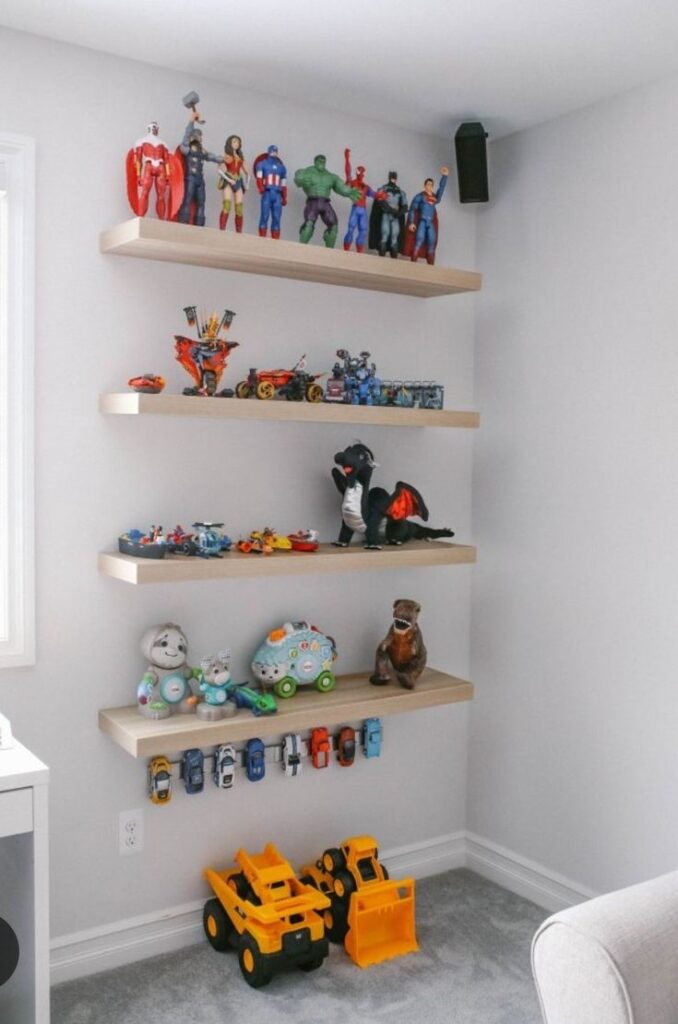
Walls offer significant untapped storage space in small rooms. Mounted shelving at child height keeps toys off the floor and uses vertical space that might otherwise go empty. Pegboards with hooks and small baskets hold craft supplies, dress-up accessories, and lightweight toys in a way that looks intentional and decorative.
Wall-mounted bookshelves work particularly well for books and small toy sets. Forward-facing display shelves that show book covers rather than spines make books more appealing to young readers and add a lovely visual element to the room. The Ultimate Guide to Creating a Cozy Reading Nook for Kids shows how wall-mounted shelving can become the centrepiece of a beautiful and functional reading corner that children genuinely love spending time in.
Behind-the-Door Storage
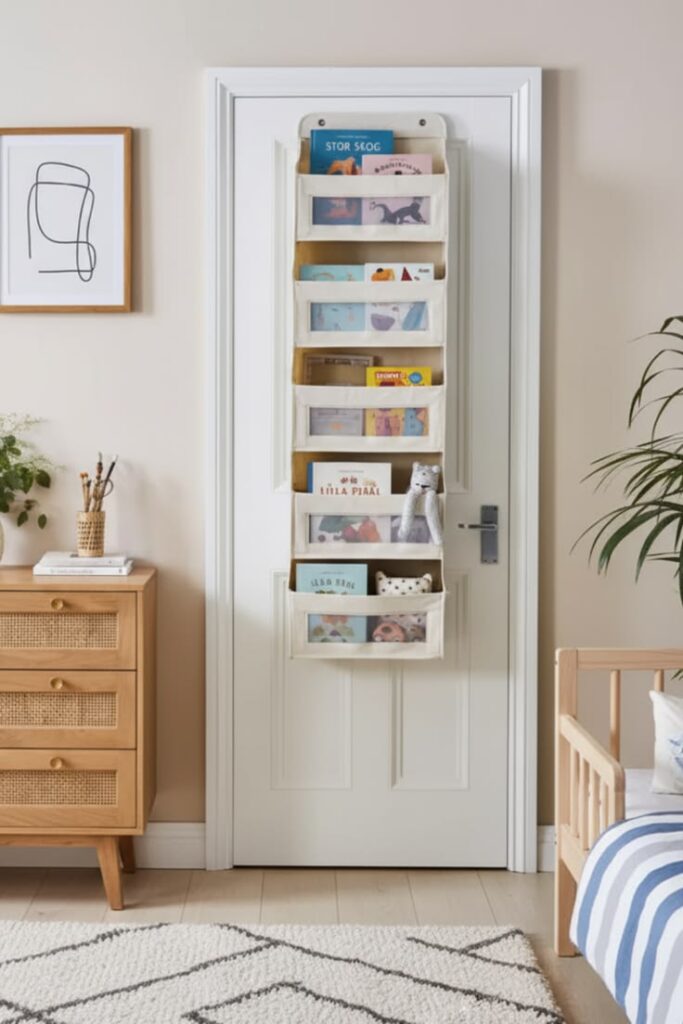
The back of a bedroom door is an often-overlooked storage opportunity. Over-the-door organisers with clear pockets hold small toys, art supplies, and accessories without taking up any floor or shelf space. They are particularly useful in shared rooms where every square inch matters.
Shoe organisers repurposed for toys work remarkably well. Each pocket becomes a dedicated home for a small category of toys. Children can see everything at a glance, and putting items back requires nothing more than dropping them into the right pocket.
Making the Toy Storage Ideas System Last
The best toy storage ideas in the world will not help if the system does not hold up over time. A few simple habits keep even the most well-designed storage system functioning the way it was intended.
Reassess the system every few months. Children grow and their play habits change. A storage system that worked perfectly for a three-year-old may need adjusting for a five-year-old. Stay flexible and be willing to shift things around when a category grows or a type of toy gets retired.
Involve children in updates to the system. When children understand why things are stored where they are, and when they have some say in how the space is organised, they feel invested in maintaining it. A brief conversation about where the new toy collection will live, or which bin needs a new label, keeps children engaged and responsible.
Keep the total quantity of toys manageable. Regardless of how good the storage system is, too many toys will always defeat it. Regular decluttering keeps the system working as intended. 25 Minimalist Kids Room Ideas That Stay Organized and Beautiful is a beautiful source of inspiration for families who want a space that feels genuinely calm and inviting rather than overwhelming.
And remember that the tidiest moments are not always the most memorable ones. The craft sessions that leave the table covered in glitter, the LEGO city that spread across the entire floor for three days, the fort that took over the living room — those are the moments children carry with them. Good toy storage ideas give you the system to reset easily after those magical, messy moments, so you can say yes to them more often.
Why It Is Important to Teach Kids to Clean Up After Playing
Teaching children to clean up after playtime goes far beyond having a tidy bedroom. It helps them develop responsibility, independence, and respect for their belongings from an early age. When kids know every toy has a designated place, putting things away becomes part of the fun instead of a chore they want to avoid.
Good toy storage ideas make this lesson much easier to teach. Instead of facing an overwhelming pile of toys, children can quickly sort building blocks into one bin, stuffed animals into another, and art supplies onto a shelf. Simple systems remove the guesswork and help even younger children understand where everything belongs.
Cleaning up also teaches valuable life skills that children carry into adulthood. They learn how to organize, follow routines, solve simple problems, and take pride in caring for their own space. Over time, these small daily habits build confidence because children begin to see that they are capable of completing tasks on their own.
There is another benefit parents often notice. A well-organized play area creates a calmer environment for everyone. Children spend less time searching for missing toys and more time enjoying them. Parents spend less time picking up after every play session and more time joining in the fun. The right toy storage ideas do more than reduce clutter, they encourage positive habits that make family life smoother, less stressful, and much more enjoyable.
Common Mistakes to Avoid With Kids’ Toy Storage
Even well-intentioned storage setups can fall short if a few common mistakes sneak in. Knowing what to watch for saves time and frustration.
Choosing aesthetics over accessibility. Beautiful closed cabinets and lidded boxes look stunning but slow down both play and cleanup. Prioritise systems children can navigate independently over ones that look perfect in photos.
Too many categories. Over-sorting creates a system too complicated for children to maintain. Aim for broad, clear categories rather than hyper-specific ones. One bin for all vehicles is easier to maintain than separate bins for trucks, cars, trains, and aeroplanes.
Inconsistent labelling. A system where some bins are labelled and some are not creates confusion. Label everything consistently from the start and update labels when the contents change.
Placing storage in the wrong location. Storage that lives in a closet, in another room, or above a child’s reach will not get used for putting things away. It will only get used when an adult puts things away. Keep daily-use storage where children can reach it independently. 31 LEGO Bedroom Ideas for Creative Builders navigates this exact challenge for one of the most notoriously difficult toy categories to store, with creative solutions that actually hold up over time.
Skipping the declutter step. Organising without first reducing the quantity of toys almost always leads to a system that overflows immediately. The toy audit is not optional. It is the foundation everything else builds on.
Final Thoughts
Toy storage ideas work best when they match the child, the space, and the family’s real daily life rather than an idealised version of it. A system that is simple, accessible, visually clear, and genuinely manageable for the child will outlast any elaborate organisation project that prioritises appearance over function.
The payoff goes beyond a tidy room. Children who grow up in organised spaces with systems they understand develop confidence, independence, and a sense of care for their environment. Those are qualities that extend far beyond the playroom and stay with them for years.
Start small if the whole thing feels overwhelming. Pick one area, set up one simple system, and watch how your child responds. Build from there. The best storage systems grow with the child and with the family, and they leave plenty of room for all the beautiful, messy, magical moments that make childhood so worth celebrating. The Ultimate Guide to Creating Meaningful Childhood Memories With Kids is a wonderful read for anyone who wants a home that supports not just organisation, but the kind of everyday moments that children remember long after the toys have been packed away.
Check out other related guides here: